







Mandala wall sticker ideas can turn a plain wall into a calm, detailed focal point without introducing the visual weight of framed artwork or a patterned feature wall. Because Apex mandala decals are cut from one-colour self-adhesive vinyl, they sit directly against the wall with no clear, white or printed background, creating a crisp, painted-on appearance.
The key is to match the mandala’s scale and complexity to the room. A large centred design can anchor a bedroom or meditation area, while a smaller mandala can add interest above a console, desk or reading chair. This guide covers practical placement ideas, colour choices and planning steps to help you achieve a balanced result.
Quick answer: where does a mandala wall sticker look best?
A mandala wall sticker usually works best where its circular or radial shape can be seen clearly. Strong placements include above a bed, behind a meditation cushion, over a living-room console, beside a reading chair or centred on a calm home-office wall.
Choose a wall with enough uninterrupted space around the design. As a simple rule, the decal should feel visually connected to the furniture below it without being squeezed between shelves, lamps or door frames. Smooth, clean and dry walls offer the best surface for application.
Mandala wall sticker ideas by room
1. Create a calm bedroom focal point
Positioning a mandala above the headboard gives the bed a clear visual anchor. This works particularly well when the remaining décor is restrained: plain bedding, simple bedside tables and a limited palette allow the intricate vinyl shape to stand out.
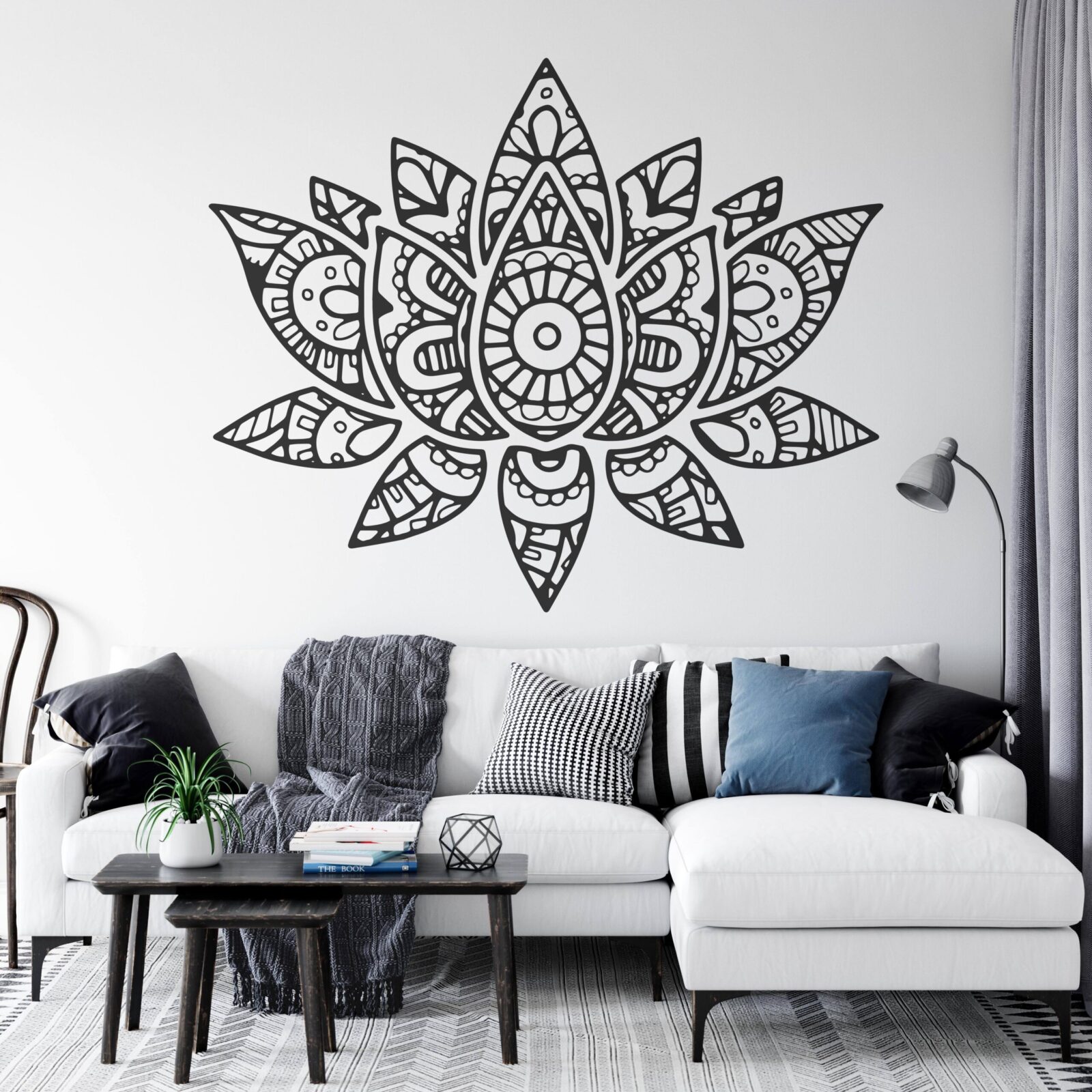
A wide, detailed mandala suits a double or king-size bed, but leave visible wall space around its outer edge. If your headboard is tall or decorative, a simpler decal may prevent the arrangement from feeling too busy. Charcoal or dark navy can feel softer than black while retaining strong contrast against white, pale grey or muted-colour walls.
2. Define a yoga or meditation corner
A mandala can provide a visual centre for a small wellbeing area. Place it behind a meditation cushion, yoga mat storage basket or low bench, keeping the centre of the design close to seated eye level. The result should feel grounded rather than floating near the ceiling.
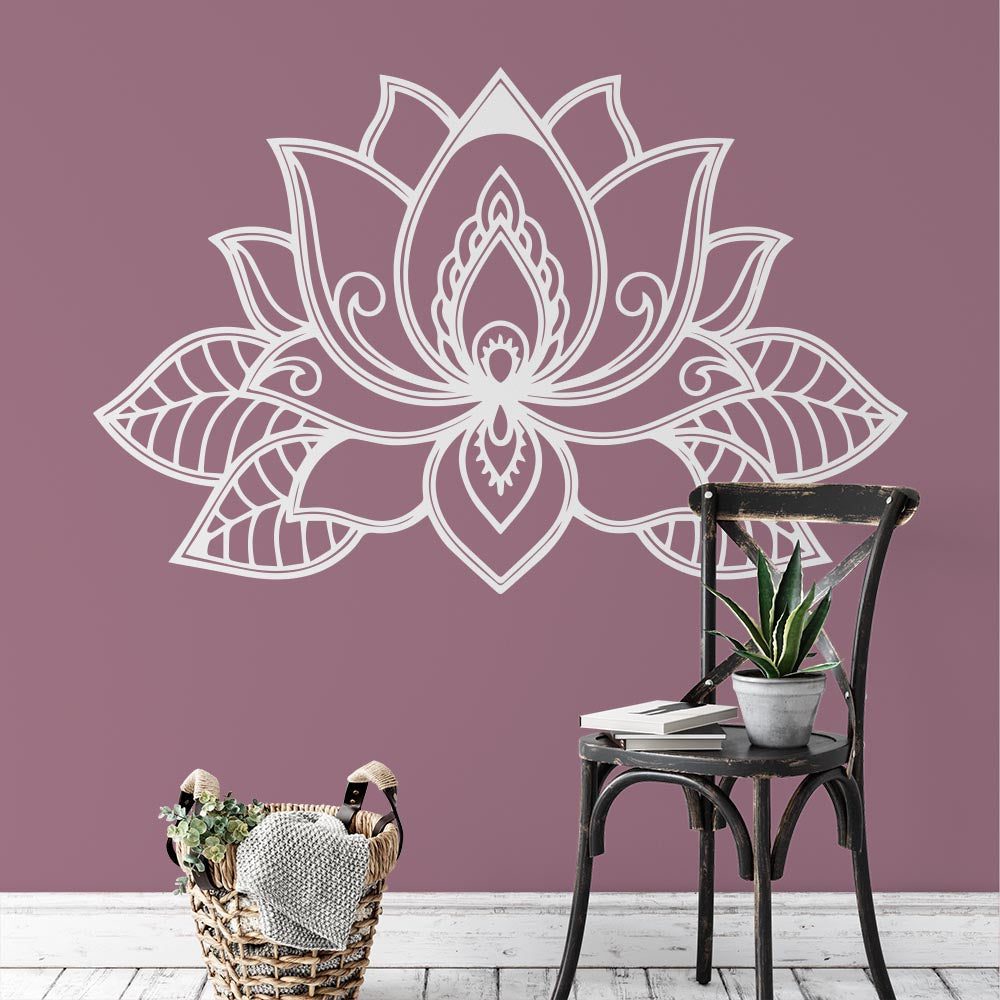
If you are creating a dedicated relaxation space, explore complementary yoga and meditation wall stickers. Choose one main motif rather than combining several equally detailed designs on the same wall.
3. Add detail above a living-room console
A mandala can replace a mirror or framed print above a console table. Centre the decal relative to the furniture rather than the entire wall, particularly when the console is intentionally positioned off-centre. Allow enough separation between the tabletop accessories and the bottom of the sticker so each element remains distinct.
Keep styling simple beneath an elaborate design. A lamp, small plant and one ceramic object will usually create better balance than a row of numerous ornaments.
4. Build a boho-inspired feature wall
Mandala motifs fit naturally into boho interiors, especially when paired with natural textures, warm wood, woven baskets and soft textiles. A dark one-colour decal adds definition so that a room filled with tactile materials does not lose its visual structure.
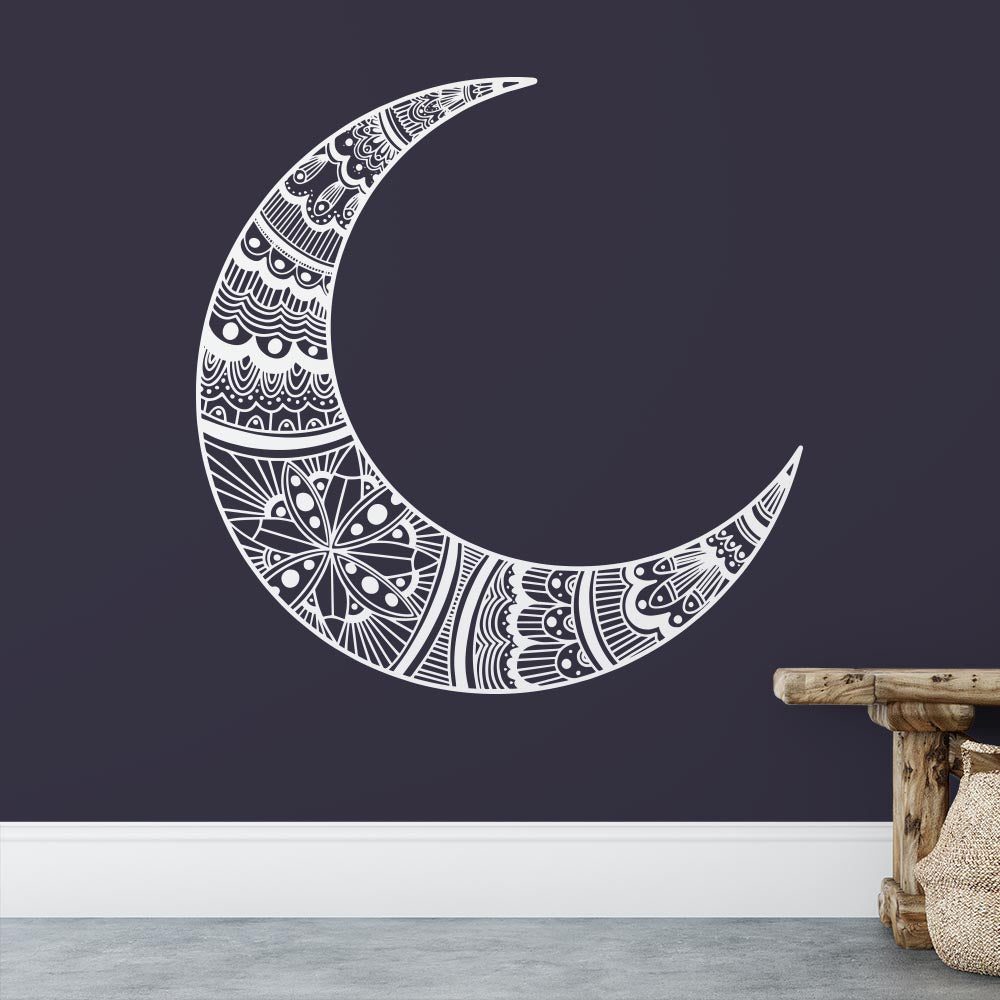
For a more eclectic look, browse boho wall sticker designs. Keep the palette controlled: if rugs and cushions already contain several colours, choose a neutral vinyl colour rather than adding another competing shade.
5. Make a reading corner feel intentional
A smaller mandala positioned above or slightly behind an armchair can transform unused wall space into a reading area. Use the chair and a floor lamp to define the zone, then align the decal with the chair’s visual centre. An asymmetrical furniture arrangement can still feel balanced when the sticker relates clearly to the seating below.
6. Give a home office a calmer backdrop
In a home office, use a mandala on a side wall or behind the desk to add personality without covering the entire surface. A moderately detailed pattern can offer interest while remaining less distracting than multicoloured wall art. If the wall is visible during video calls, check the composition from the camera position before applying the decal.
How to choose the right mandala style
Not every mandala creates the same mood. Consider the level of detail, the visual weight of the linework and the shape of the surrounding space.
- Intricate circular mandalas: Best for uncluttered feature walls where the design has room to breathe.
- Open, minimal patterns: Useful in smaller rooms or above detailed furniture.
- Half-mandala designs: Effective near a furniture edge or for creating an intentionally cropped visual effect.
- Floral-inspired mandalas: A softer option for bedrooms, reading corners and boho schemes.
- Geometric mandalas: Well suited to contemporary offices, monochrome rooms and cleaner interiors.
What you need before you start
Before ordering or applying your sticker, gather the information and basic items needed to make a confident placement decision:
- The width and height of the usable wall area
- The dimensions of the furniture below or beside the sticker
- Low-tack masking tape or removable markers for planning only
- A tape measure and pencil
- A clean, soft cloth for preparing the surface
- A smoothing tool or suitable flat edge for application
- The product’s supplied application instructions
Check the wall carefully. Wall stickers work best on smooth, clean, dry surfaces. Texture can prevent narrow sections of an intricate mandala from making consistent contact. Freshly painted walls need to cure fully before applying stickers; follow the paint manufacturer’s guidance rather than assuming that touch-dry paint is ready.
Step-by-step: plan and apply a mandala wall sticker
Mandala placement checklist
- Measure the usable area — exclude switches, shelves, sloping ceilings and furniture that interrupts the wall.
- Mark the intended footprint — use small pieces of low-tack masking tape to represent the sticker’s outer dimensions, without leaving them on longer than necessary.
- Check the centre line — align the design with the furniture or activity zone it belongs to, not automatically with the whole wall.
- View it from across the room — sit and stand in the positions from which the mandala will normally be seen.
- Prepare the surface — make sure the wall is smooth, clean, completely dry and suitably cured.
- Apply the sticker carefully — follow the supplied instructions, working steadily to preserve the alignment of fine details.
- Check the edges — gently smooth all sections, paying particular attention to narrow points and intricate cut areas.
Step 1: measure the wall and furniture
Measure the unobstructed section of wall first, then the furniture below it. A sticker placed above a bed or console should generally be narrower than that furniture so the arrangement feels anchored. Avoid selecting a size from the wall measurement alone; a design can physically fit yet still overwhelm the room.
Step 2: map out the full outer dimensions
Use temporary corner markers to visualise the product’s listed width and height. This is more useful than marking only the centre point because mandalas often have fine outer details that extend further than expected. Leave the outline in place briefly and assess it during daytime and evening lighting.
Step 3: choose the visual centre
Decide what the mandala belongs to. Above a bed, use the centre of the headboard. In a meditation corner, use the centre of the mat or cushion arrangement. Above a console, align it with the furniture. This produces a more intentional result than centring every sticker on the total wall width.
Step 4: test the viewing height
Mandala decals often look better at eye level or only slightly above it. Placing one close to the ceiling can disconnect it from the furniture and leave an awkward gap underneath. Step back to the doorway and other normal viewing positions before finalising the height.
Step 5: prepare the surface
Remove dust and make sure the wall is dry. Pay attention to areas above radiators or near windows, where surfaces may collect residue or experience changing temperatures. Do not apply a decal over peeling paint, damp patches or unstable finishes.
Step 6: apply according to the supplied instructions
Detailed mandalas can contain many narrow vinyl elements, so work slowly. Keep the design aligned, smooth it consistently and avoid rushing the transfer stage. Do not pull or stretch the vinyl to correct positioning, as this can distort the symmetry.
Step 7: inspect the complete design
Once applied, inspect the outer points and fine internal shapes. These details are integral to the design, so make sure each section has made suitable contact with the wall. Avoid aggressive rubbing that might mark a delicate painted surface.
Colour and contrast ideas
The wall colour becomes part of the finished artwork because the cut-vinyl design has no printed background. This makes contrast especially important.
- White or pale grey wall: Black, charcoal or dark navy creates a crisp, graphic effect.
- Muted green or dusty blue wall: White can feel light and calm, while charcoal creates a stronger focal point.
- Deep feature wall: Choose a pale vinyl shade with sufficient contrast; avoid close tonal matches that hide fine details.
- Colourful boho room: Use black, white or another neutral to bring structure to the varied textiles.
- Minimal contemporary room: Echo an existing dark accent from lighting, handles or furniture legs.
View colour samples under the room’s actual lighting where possible. A shade that appears distinct in daylight may have much less contrast in warm evening light.
Common mandala wall sticker mistakes
Choosing a design that is too small
A small decal can look lost over a wide headboard or long console. Mark the full dimensions before ordering and assess them from the room entrance, not only from directly in front of the wall.
Placing the design too high
High placement is one of the most common causes of an unbalanced result. Relate the decal to nearby furniture and leave comfortable, rather than excessive, space between them.
Combining too many detailed patterns
Mandala designs already contain considerable visual information. Patterned wallpaper, highly decorative bedding and several ornate accessories can compete with the sticker. Choose one dominant pattern and let the other elements support it.
Applying to an unsuitable surface
Rough texture, dust, damp, uncured paint or weak paintwork can affect adhesion. Fine details need reliable surface contact, so check the entire intended area before starting.
Assuming removal will always be risk-free
Do not base your decision on a guarantee that every painted surface will respond identically. Removal results depend on wall condition, paint quality and how carefully the sticker is removed.
Forgetting doors, lamps and camera views
Check whether an open door covers the design, a lamp casts distracting shadows or a video-call crop cuts through the motif. Testing the placement from several viewpoints can reveal issues that measurements alone miss.
When to choose a different product or approach
A mandala decal is not the right solution for every wall. Consider another approach when:
- The surface is heavily textured: Framed artwork may sit more reliably than fine cut-vinyl details.
- The paint is flaking or unstable: Repair and repaint the wall before adding decoration, allowing the finish to cure fully.
- You want a multicoloured illustration: One-colour cut vinyl is designed for a clean silhouette appearance, not a printed mural effect.
- The wall is already visually busy: Simplify the décor or choose a smaller, more open design.
- You cannot create enough contrast: A framed piece with its own background may be more visible.
- You need to cover imperfections: A decal follows the wall rather than disguising dents, cracks or texture.
If you prefer wellbeing symbolism over decorative radial patterns, the yoga and meditation collection may be a better fit. For a broader mix of relaxed ornamental and botanical styles, compare the boho wall stickers collection.
Frequently Asked Questions
What size mandala wall sticker should I choose?
Measure both the usable wall and the furniture below it. The design should be large enough to look intentional but usually narrower than a bed, desk or console that anchors it. Mark the listed outer dimensions on the wall before ordering.
Can I apply a mandala sticker to a freshly painted wall?
Wait until the paint has fully cured, not merely dried to the touch. Check the paint manufacturer’s curing guidance because timings vary by product and room conditions.
Do mandala wall stickers have a clear background?
Most Apex designs are cut from one-colour self-adhesive vinyl and do not have a clear, white or printed background. The visible wall forms the negative spaces within the pattern, creating a clean painted-on look.
Will a detailed mandala work on a textured wall?
Wall stickers work best on smooth, clean and dry surfaces. Texture may reduce contact, particularly around narrow lines and small points, so another form of wall décor may be more suitable for heavily textured finishes.
Can a mandala decal be removed later?
It can be removed carefully, but outcomes vary between surfaces. Removal results depend on wall condition, paint quality and how carefully the sticker is removed.
Find a mandala design for your space
The most effective mandala feature walls balance pattern, scale and empty space. Measure carefully, assess the wall surface and choose a vinyl colour that remains clear in both natural and artificial light.
If you are planning a calm bedroom, meditation corner or boho-inspired living area, browse the mandala wall stickers collection for one-colour self-adhesive designs that work best on smooth, clean and dry walls.