

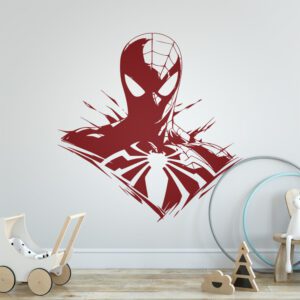
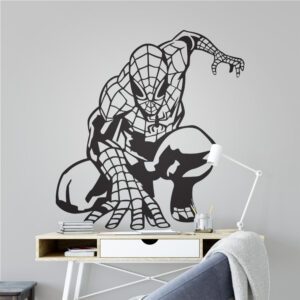
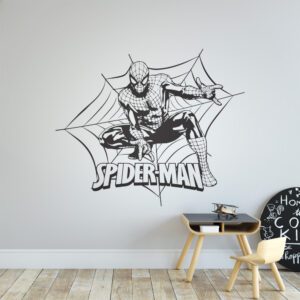


Choosing between wall stickers vs painted murals usually comes down to four things: budget, time, flexibility and the level of creative detail you want. Both can turn a plain wall into a feature, but they involve very different commitments. A self-adhesive vinyl wall sticker offers a clean, precise design that can be applied relatively quickly, while a painted mural provides greater freedom over colour, scale and bespoke artwork.
This comparison explains the practical trade-offs so you can decide which option suits your room, surface and decorating plans. Apex wall stickers are cut from one-colour vinyl, so most designs have no clear, white or printed background. Once applied, the separate vinyl elements create a neat, painted-on appearance without covering the whole wall.
Quick verdict
Choose a wall sticker if you want an affordable feature, a crisp one-colour design and a project that can usually be completed without hiring an artist. Wall stickers are particularly useful for names, quotes, silhouettes and themed children’s rooms.
Choose a painted mural if you want a highly detailed, multicoloured or completely bespoke scene and are comfortable with the extra time, cost and decorating work. Murals can cover awkward spaces and entire walls, but changing the design normally means repainting.
For many bedrooms, nurseries, playrooms and home offices, wall stickers provide the better balance of visual impact, price and flexibility. A painted mural becomes more compelling when artistic detail and full-wall coverage matter more than speed or future changes.
Wall stickers vs painted murals comparison
Wall stickers and painted murals at a glance
| Factor | Wall stickers | Painted murals |
|---|---|---|
| Best for | Quick feature walls, names, quotes and silhouettes | Bespoke scenes, multiple colours and full-wall artwork |
| Typical commitment | Lower; the design can be removed when tastes change | Higher; changing it usually requires preparation and repainting |
| Application time | Often completed in one decorating session | Can take several sessions, including drying time |
| Design style | Crisp, single-colour cut-vinyl graphics | Painted detail, shading, textures and broad colour palettes |
| Surface needs | Smooth, clean, dry walls in sound condition | A stable, prepared wall suitable for the chosen paint |
| Skill level | Careful measuring and application | Confident painting skills or a professional artist |
| Cost | Generally more predictable and accessible | Varies widely with size, detail, materials and labour |
| Future updates | Easier to replace with another vinyl design | Usually needs painting over before creating a new feature |
Wall sticker pros and cons
Advantages of wall stickers
- Quick transformation: A wall sticker can add a strong focal point without the extended preparation and drying stages associated with painted artwork.
- Predictable appearance: The vinyl is machine cut, giving letters, shapes and silhouettes clean, consistent edges.
- No printed background: Most Apex designs are cut from one-colour vinyl rather than printed onto a rectangular sheet. The visible wall becomes the background, creating a painted-on look.
- Accessible cost: A ready-made decal is generally less expensive than commissioning an artist for a detailed mural.
- Useful personalisation: Names and selected wording can become part of the room without requiring hand-painted lettering. Explore personalised name wall stickers for this type of feature.
- Easier room updates: If a child’s interests or your decorating style changes, replacing a decal is generally more straightforward than covering a mural with several coats of paint.
Disadvantages of wall stickers
- Surface limitations: Stickers work best on smooth, clean, dry surfaces. Heavy texture, dust, damp, flaking paint or low-quality paint can affect adhesion and the final result.
- Fresh paint needs time: Newly painted walls should be allowed to cure fully before a sticker is applied. The paint manufacturer’s curing guidance should take priority over a rushed room deadline.
- More limited colour treatment: Cut-vinyl designs are ideal for strong silhouettes and typography, but they do not recreate the blended shading or painterly detail of a mural.
- Careful positioning is important: Large or intricate decals need measuring, alignment and patient application. The quick wall sticker application guide explains the basic process.
- Removal varies by wall: No adhesive decoration should be treated as universally suitable for every painted surface. Removal results depend on wall condition, paint quality and how carefully the sticker is removed.
Painted mural pros and cons
Advantages of painted murals
- Complete creative freedom: A mural can use numerous colours, gradients, brush textures and fine details.
- Made for the exact space: Painted artwork can flow around corners, sloping ceilings, alcoves, sockets and unusual architectural features.
- Full-wall coverage: Murals can create an immersive landscape or scene rather than a standalone graphic.
- Unique result: A commissioned mural can be designed specifically around the room, furniture and preferred colour palette.
- No adhesive layer: On walls that are suitably prepared for paint but unsuitable for vinyl, painted decoration may be the more practical route.
Disadvantages of painted murals
- Greater cost uncertainty: Paint, preparation and professional labour can make a detailed mural considerably more expensive than a decal.
- Longer project: Sketching, masking, painting and drying may keep the room out of normal use for longer.
- Dependent on artistic skill: A DIY mural can be rewarding, but complex proportions, clean curves and consistent lettering are difficult to achieve without experience.
- Harder to change: A dark or highly detailed mural may need primer and multiple coats before the wall returns to a plain finish.
- Finish can be less predictable: Wall texture, paint coverage and brush technique all influence the result.
Which option is best for different situations?
Best for a child’s bedroom: wall stickers
Children’s tastes can change quickly, so a flexible feature is often more practical than a permanent painted scene. Stars, animals, vehicles, names and playful silhouettes can define the room without covering every part of the wall. The children’s wall stickers collection offers themes suited to bedrooms, nurseries and play spaces.
A mural may still be worthwhile if you want an immersive, storybook-style room that will remain relevant for several years. Consider whether the artwork can mature with the child before committing to a highly specific scene.
Best for personalised names or precise lettering: wall stickers
Vinyl is particularly effective for names and lettering because the characters have sharp, consistent outlines. Hand-painting typography requires careful spacing and a steady technique, while a prepared decal makes the intended layout easier to preview and position.
The same advantage applies to decorative wording. Browse quote wall stickers if you want a clean typographic feature for a bedroom, hallway, kitchen or workspace.
Best for a detailed landscape or multicoloured scene: painted mural
If your idea depends on realistic depth, many colours, intricate characters or soft painted transitions, a mural offers more creative range. It can turn an entire wall into a continuous scene and adapt the artwork around the dimensions of the room.
Before commissioning one, ask for a clear sketch, colour plan, schedule and total price. It is also worth considering how the scene will look if furniture is rearranged or the room changes purpose.
Best for a quick weekend update: wall stickers
A sticker is usually the more manageable choice when you want visible change without a prolonged decorating project. Preparation still matters: the wall should be smooth, clean and dry, and measurements should be checked before application. Do not apply vinyl to paint that is still curing.
Best for an awkward or heavily textured wall: painted mural
Vinyl may struggle to make consistent contact with rough, uneven or heavily textured surfaces. Painting can sometimes cope better with irregular areas, although the wall may still require filling, cleaning or priming. Test the chosen paint system and assess the stability of the existing finish first.
Best for renters: depends on the agreement and wall condition
A wall sticker can appear less permanent than painted artwork, but renters should not assume that every adhesive decal is automatically suitable. Check the tenancy agreement, ask permission where necessary and consider the age and quality of the paint. A discreet test in an inconspicuous area may help identify poor paint adhesion, although it cannot guarantee the result elsewhere.
Painting a mural will usually require the landlord’s approval and may carry an obligation to restore the original colour. In either case, confirm expectations before changing the wall.
Best for budget control: wall stickers
A ready-made sticker normally has a clear upfront product price and does not require specialist artistic labour. The main variables are design and size. A mural budget can expand as complexity, wall preparation, paint colours and working time increase.
How to make the final choice
Start by deciding whether your priority is graphic precision or artistic detail. Wall stickers suit bold silhouettes, names, quotes and simple themed elements. Murals suit blended colour, freehand detail and immersive scenes.
Next, inspect the wall rather than choosing on appearance alone. Vinyl needs a smooth, clean, dry surface with sound paint. A mural also needs a stable base, but paint may be more forgiving of minor texture. Freshly painted walls must cure before applying a sticker.
Finally, think about how long the design needs to last. If you expect to refresh the room as tastes change, a decal provides greater flexibility. If the artwork is intended to become a long-term part of the interior and the budget allows, a mural may justify the additional commitment.
Explore wall sticker options
If a clean one-colour feature suits your space, browse the wall stickers collection for self-adhesive designs made for smooth, clean, dry walls. Compare the available sizes with your wall dimensions and review the application guidance before ordering.
Frequently Asked Questions
Are wall stickers cheaper than painted murals?
Ready-made wall stickers are generally cheaper than professionally commissioned murals. A simple DIY painted design may cost less, but the final price depends on paint supplies, wall preparation, size, complexity and whether specialist labour is required.
Do wall stickers look like painted designs?
Cut-vinyl stickers can create a crisp painted-on appearance because most have no clear, white or printed rectangular background. However, they retain the smooth, precise character of vinyl rather than the brush texture, shading and colour variation of a hand-painted mural.
Can a wall sticker be applied to any painted wall?
No. Wall stickers work best on smooth, clean, dry surfaces with paint in sound condition. Rough texture, damp, dust, washable or specialist coatings, and weak or flaking paint can affect adhesion. Fresh paint should be allowed to cure before application.
Which option is easier to change later?
A wall sticker is generally easier to change because it can be carefully removed and replaced without painting an entirely new scene. Results still vary between surfaces. Removal results depend on wall condition, paint quality and how carefully the sticker is removed.
Should I choose a large sticker or a full painted mural?
Choose a large sticker when you want a defined focal graphic with surrounding wall space still visible. Choose a mural when the concept depends on edge-to-edge coverage, numerous colours or artwork shaped precisely around the room’s architecture.
Ready to plan a practical feature wall? Explore the full wall stickers range and choose a design that complements your room, available wall space and surface condition.