







Nature wall sticker ideas for calm bedrooms can bring softness, movement and an outdoor influence into your room without filling it with bulky décor. From delicate branches behind a bedside table to a restrained woodland silhouette above the bed, the right design can make a bedroom feel restful while retaining the clean, painted-on appearance of one-colour cut vinyl.
Quick answer: which nature wall sticker creates the calmest look?
For most calm bedrooms, choose a simple botanical, woodland or bird design in one understated colour. Match its scale to the furniture beneath it, place it where it can act as a quiet focal point, and leave generous empty wall space around it.
Dark navy and charcoal provide clear definition without the severity that black can sometimes create. Black works particularly well in crisp monochrome rooms, while softer neutral vinyl colours can suit pale Scandinavian schemes if there is enough contrast with the wall.
What you need before you start
Before choosing a nature design, assess the bedroom rather than selecting a sticker in isolation. A design that looks beautifully balanced online may feel too busy, too small or poorly positioned when placed alongside your existing furniture.
- A suitable surface: Wall stickers work best on smooth, clean, dry surfaces. Heavily textured walls may prevent the vinyl from adhering evenly.
- A cured painted wall: Freshly painted walls should cure before applying stickers. Follow the paint manufacturer’s guidance because cure time is different from touch-dry time.
- Accurate wall and furniture measurements: Measure both the available wall and the width of the bed, headboard, chest or desk beneath the proposed position.
- A clear view of the room: Consider what you see from the doorway and from the bed. Calm décor usually benefits from one intentional focal point rather than several competing features.
- A defined palette: Note the wall, bedding, curtain and furniture colours so the vinyl looks connected to the room.
- A planned mood: Decide whether you want airy botanical detail, a grounded woodland scene, gentle wildlife or a pared-back Nordic look.
Surface condition and paint quality affect application and removal. If the paint is flaky, chalky, damp or poorly bonded, address the underlying issue before considering a sticker.
Nature wall sticker ideas for different calm bedroom styles
1. A branch reaching in from one side
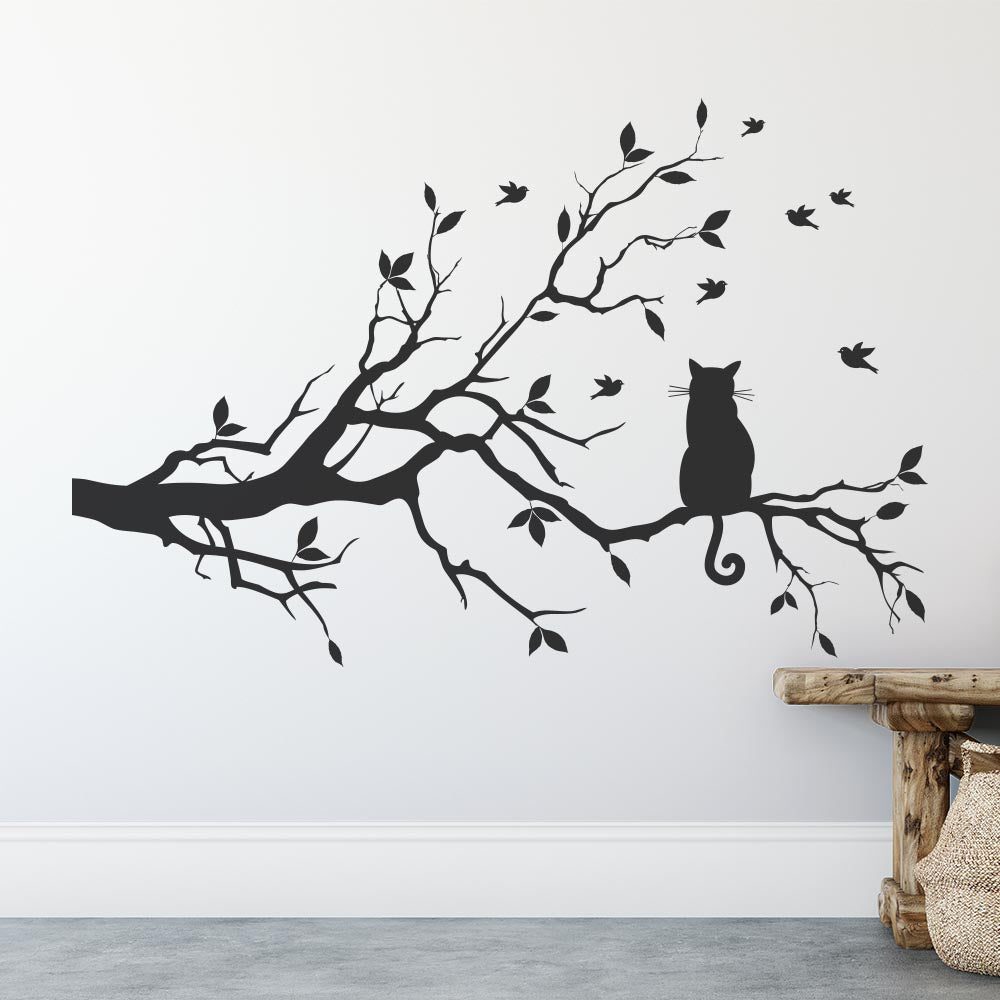
An asymmetrical branch can soften a bedroom without dominating it. Place it beside a headboard, above a bedside table or in an otherwise empty corner. The direction of the branch should lead the eye into the room rather than towards an edge or doorway.
This is especially effective in compact rooms because the open form preserves visible wall space. Choose a design with a limited number of leaves if your bedding already has a pattern.
2. Birds or butterflies with plenty of breathing room
Small flying silhouettes create gentle movement and can lead the eye across a blank wall. A loose group above a chest of drawers or beside a reading chair feels lighter than a dense central motif. Avoid scattering too many separate elements around the entire room, as this can turn a restful scheme into a visually busy one.
Explore birds and butterflies wall stickers for designs that work well in light, nature-led bedrooms.
3. A low woodland silhouette
A line of trees positioned above a low headboard or along a wide empty wall can make the room feel grounded. This approach suits larger bedrooms where a small leafy motif could look lost. Keep the area above the treeline uncluttered and avoid adding shelves or framed prints that compete with its outline.
4. Minimal botanical linework
A simple stem, leaf or floral silhouette suits modern bedrooms where the goal is calm rather than rustic character. Place one medium-to-large motif above a dressing table or on the wall opposite the bed. The clean outline works particularly well with plain linen, light wood and warm grey furnishings.
5. Scandinavian-inspired nature shapes
Nordic-style décor combines natural references with restraint. Think simplified trees, leaves, hills or abstract outdoor forms rather than highly detailed scenery. Keep the palette limited, choose functional furniture and allow the wall sticker to provide the main decorative line.
For this approach, browse the Scandinavian wall stickers collection and compare simple silhouettes with the colours and shapes already in your bedroom.
6. A nature motif above a reading corner
A bedroom reading corner is a natural home for a branch, leafy stem or small group of birds. Align the sticker with the chair and side table so all three elements read as one zone. This creates a meaningful feature without placing visual detail directly behind the bed.
7. A centred feature above the bed
A balanced tree canopy, pair of branches or symmetrical botanical design can visually anchor the bed. The sticker should relate to the width of the headboard rather than floating as a small isolated shape. Leave a clear gap between the headboard and vinyl, and check that pillows will not obscure the lower details.
How to choose the best idea for your room
Use the room’s size, existing pattern and desired mood to narrow your options. These trade-offs are more important than following a single décor trend.
- Small bedroom: Choose an open branch, simple stem or small bird group. These add interest without making the wall feel crowded.
- Large blank wall: Use a broader woodland, treeline or botanical composition with enough scale to look deliberate.
- Patterned bedding: Prefer a simple silhouette with broad, clean shapes.
- Plain bedding: A more detailed nature design can add character while retaining a limited colour palette.
- Low ceiling: A vertical branch or tall stem can encourage the eye upwards, provided the decal remains clear of the ceiling edge.
- Busy furniture layout: Place one restrained motif in the clearest visual zone rather than squeezing it between shelves and wardrobes.
Step-by-step instructions for planning and applying your sticker
Calm bedroom wall sticker checklist
- Choose one focal wall — identify the clearest view from the doorway or bed.
- Measure the space — record wall width and height as well as the furniture below it.
- Select the mood — choose botanical, woodland, birds, butterflies or Scandinavian nature shapes.
- Check contrast — make sure the one-colour vinyl will remain clearly visible against the paint.
- Test the position — mark the outer dimensions lightly with low-tack guides and view them from across the room.
- Prepare the surface — ensure it is smooth, clean, fully dry and that fresh paint has cured.
- Apply carefully — follow the supplied directions, working steadily to keep the design aligned.
- Edit nearby décor — remove competing prints or ornaments if the finished wall feels too busy.
Step 1: Choose the bedroom’s visual focal point
The wall behind the bed is the obvious option, but it is not always the best one. If there is an elaborate headboard, patterned wallpaper or several pictures there already, choose a quieter wall opposite the bed or create a small feature beside a chair.
Step 2: Size the design against furniture
Use the bed or furniture below the sticker as a visual anchor. A sticker that is too narrow can look disconnected; one that extends awkwardly beyond the furniture can feel unbalanced. Mark the approximate outer dimensions on the wall and step back before ordering.
Step 3: Select one vinyl colour
Apex designs are cut from one-colour self-adhesive vinyl. Most have no clear, white or printed background, allowing the wall colour to show around and through the design for a clean, painted-on look.
Dark navy works well with white, soft grey and muted blue bedrooms. Charcoal suits warm grey and gentle neutral walls, while black creates a stronger graphic contrast. Avoid choosing a vinyl colour too close to the paint unless you deliberately want a subtle effect and have checked that the design remains visible in evening light.
Step 4: Reduce competing visual detail
Calm does not mean empty, but each item should have space. If the sticker sits above the bed, keep nearby cushions and throws relatively restrained. If it includes many small leaves or birds, use plain curtains or bedding to counterbalance the detail.
Step 5: Check and prepare the wall
Examine the proposed area in daylight. It should be smooth, clean and dry, with sound paint. Dust, grease, moisture and texture can affect adhesion. Freshly painted walls should cure before applying stickers, according to the paint manufacturer’s instructions.
Step 6: Plan the position at full scale
Use removable paper shapes or lightly placed low-tack guides to represent the design’s outer boundary. Do not rely solely on close-up viewing. Stand in the doorway, sit on the bed and check the composition under both daylight and bedside lighting.
Step 7: Apply the design steadily
Read the supplied product directions before beginning. Keep the design aligned, work carefully and smooth the vinyl as directed. Larger or more detailed decals may be easier with another person helping to hold the position.
Step 8: Review the whole room
Once applied, give the feature space to work. You may find that an adjacent picture, garland or ornament is no longer needed. Removing one competing accessory can make the wall sticker feel more integrated and the bedroom more restful.
Common mistakes to avoid
Choosing a sticker that is too small
A tiny design centred above a double or king-size bed can look accidental. Check dimensions against the headboard and the full wall, not just the product image.
Using too many nature themes at once
Woodland bedding, floral curtains, leaf prints and a detailed tree sticker can compete with one another. Repeat one or two shapes or colours rather than adding every nature reference available.
Placing the design too high
A sticker close to the ceiling can feel detached from the furniture. Connect it visually to the bed, chest, chair or desk beneath it while retaining a practical gap.
Ignoring evening lighting
Bedrooms are often viewed under warm, lower-level light. A low-contrast vinyl colour may disappear after sunset, while a highly detailed black design can look heavier than expected. Test the approximate colour and position at the time you use the room most.
Applying to an unsuitable surface
Do not treat vinyl as a solution for damp, crumbling, flaky or heavily textured walls. Surface condition and paint quality affect application and removal. Preparation cannot compensate for unstable paint.
Assuming removal outcomes are universal
Do not base your choice on an assumption that every painted surface will respond identically. Removal results depend on wall condition, paint quality and how carefully the sticker is removed.
When to choose a different product or approach
A self-adhesive vinyl decal is useful when you want a crisp one-colour feature with minimal physical depth. Another approach may be more appropriate in the following situations:
- The wall is heavily textured: Consider framed botanical art, fabric décor or another format suited to the surface.
- The paint is unstable: Repair and repaint the wall before decorating it.
- You want photographic colour: One-colour cut vinyl is intended to create a silhouette or graphic look, not a multicoloured printed landscape.
- You want an immersive scene: Wallpaper or a professionally painted mural may suit a full-wall forest effect better, although both create a busier and more permanent visual result.
- You change layouts frequently: Freestanding plants, bedding and framed artwork may offer greater flexibility than committing to a fixed composition.
- The design will sit on fresh paint: Wait until the coating has cured rather than rushing the room update.
Frequently Asked Questions
Which nature wall sticker colour is best for a calm bedroom?
Dark navy and charcoal offer soft but visible contrast on white, pale grey and muted neutral walls. Black creates a bolder monochrome effect. The best choice should remain visible in both daylight and evening lighting while coordinating with your bedding and furniture.
Where should I position a nature wall sticker in a bedroom?
Good positions include above the headboard, beside a bedside table, over a chest of drawers or in a reading corner. Use nearby furniture to anchor the design and leave open wall around it.
Can I apply a wall sticker to a newly painted bedroom?
Freshly painted walls should cure before applying stickers. Follow the paint manufacturer’s specified curing period, as paint can feel dry before it is fully cured.
Do nature wall stickers have a visible background?
Most Apex wall stickers are cut from one-colour vinyl and have no clear, white or printed background. The separate vinyl shapes apply directly to the wall, creating a clean, painted-on appearance.
Are wall stickers suitable for textured bedroom walls?
They work best on smooth, clean, dry surfaces. Texture can reduce contact between the adhesive and wall, so choose a different décor approach if the surface is heavily uneven.
Create a calmer nature-inspired bedroom
The strongest calm-bedroom schemes combine one well-scaled design, a restrained colour palette and plenty of open space. If you are planning a soothing room update, browse the nature wall stickers collection for one-colour botanical, wildlife and outdoor-inspired designs made for smooth, clean, dry walls.