



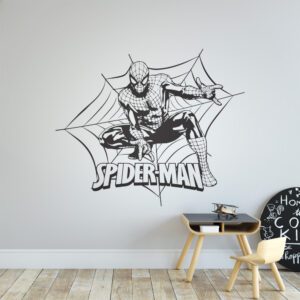


A wall sticker can completely change a room in under an hour – but only if it goes on cleanly. If you are wondering how to apply wall stickers without bubbles, peeling corners or wonky placement, the good news is that it is much easier than most people expect. A bit of prep, a steady hand and the right order of steps make all the difference.
Our wall stickers are cut from one-colour self adhesive vinyl with no background or border, so once they are on the wall they look painted rather than stuck on. That clean finish is exactly why careful application matters. The sticker itself does the visual heavy lifting. Your job is simply to give it the best surface and a smooth start.
How to apply wall stickers without mistakes
The biggest mistake people make is rushing to stick the design straight on as soon as it arrives. It is tempting, especially when you have a blank wall that needs a quick glow-up, but taking five or ten minutes to check the surface first saves far more time later.
Start with a wall that is clean, dry and fully cured if it has been freshly painted. If the paint is new, leave it to cure properly before applying anything adhesive. A wall might feel dry to the touch after a day or two, but that does not always mean it is ready. If you apply too soon, the vinyl may struggle to grip well, or worse, you could mark the paint when adjusting it.
A smooth surface gives the best result. Flat painted walls are ideal. If the wall has heavy texture, flaking paint or dust build-up, adhesion can be less reliable. That does not always mean it will fail, but it does mean you may need to press more firmly and manage expectations around very fine details.
Before you start, wipe the area with a dry or only slightly damp microfibre cloth to remove dust. Avoid strong cleaning products because residue can interfere with the adhesive. If you use any moisture at all, let the wall dry fully before moving on.
What you need before you start
You do not need a toolbox full of kit. In most cases, a few simple items are enough – a card or squeegee for smoothing, masking tape for positioning, a tape measure if you want the design centred, and a clean cloth. Scissors can help if your design comes in sections.
If you are applying a quote wall sticker, name decal or larger design, it helps to have a second pair of hands. It is still a straightforward job on your own, but having someone hold one side while you line up the other can make placement feel much more controlled.
Good lighting matters too. Corners that look straight in dim light can suddenly appear off once the room brightens up the next morning. Stand back, check the position from different angles and only then commit.
Positioning your wall sticker first
The easiest way to get a neat result is to decide exactly where the sticker will go before removing any backing paper. Hold it against the wall and use small pieces of masking tape to tack it into place. Step back and look at the height, spacing and balance within the room.
This matters more than people think. A sticker above a cot, desk, sofa or bed usually looks best when it feels visually centred against the furniture, not necessarily centred on the whole wall. If the room has shelves, a sloped ceiling or a chimney breast, your eye will judge the design against those features first.
Once you are happy, use masking tape to create a hinge across the top or down one side. That gives you a guide and keeps the sticker from shifting when you start peeling away the backing.
How to apply wall stickers step by step
With the design taped in position, gently peel the backing paper away from the vinyl and transfer layer. Do this slowly. If any part of the sticker stays stuck to the backing, press it back down and rub that section before trying again. The aim is for the vinyl to lift with the transfer layer, ready to go onto the wall.
Once the backing is removed, lower the sticker onto the wall gradually rather than all at once. Start at the top or one side and work across in small sections. Use your card or squeegee to smooth from the centre outward. This pushes out air as you go and helps the vinyl bond evenly.
Take your time around fine lettering or narrow details. These areas look brilliant once applied because they create that painted-on effect, but they do benefit from a bit more patience. Firm, even pressure works better than fast sweeping movements.
When the sticker is fully on the wall, go over the whole design again with the squeegee or card. Then begin peeling away the transfer layer slowly at a sharp angle. If any vinyl lifts, stop straight away, lay the transfer layer back down, rub the area again and retry.
That stop-and-check approach is the difference between a smooth application and one that turns into a rescue mission. For a more detailed walkthrough, use our wall sticker application guide.
Dealing with bubbles, lifting and awkward areas
Even when you know how to apply wall stickers, small issues can still happen. Most of them are easy to sort.
Tiny bubbles often settle if you smooth them outward with your fingers or card. If one remains trapped, it is usually because that section was laid down too quickly. Press around it gently and work the air towards the nearest edge. For very small bubbles, patience often helps because they can become less noticeable once the adhesive settles.
If a corner or fine detail lifts, press it down firmly with a clean dry cloth. Warm room temperature usually helps adhesion. Very cold walls can make vinyl feel less cooperative at first, so avoid applying it in a chilly room if possible.
Sockets, switches and narrow spaces need slower handling. Do not rush intricate sections just to get the job finished. A careful extra minute now gives a much cleaner look for the long term.
The best surface for wall stickers
Wall stickers work best on smooth, well-painted interior walls. Matt, silk and eggshell finishes can all be suitable, but the exact result depends on the quality and condition of the paint underneath. If the paint is old and powdery, or if the wall has signs of damp or peeling, the issue is the surface rather than the sticker.
Textured walls are a bit of an it-depends situation. A light texture may still work well, especially with simpler shapes and chunkier lettering. A heavily textured surface gives less contact area for the adhesive, so very detailed designs may not sit as neatly. If you are working with texture, extra pressure and realistic expectations are key.
Fresh paint is another common question. It is always worth waiting until the paint has cured fully, not just dried. That one bit of patience can save a lot of frustration.
Where people get the best results
Bedrooms, nurseries, home offices, gaming setups and hallways are all popular places because the transformation is immediate. A plain wall behind a bed or desk can go from blank to bold in one application. Quotes, stars, boho shapes, names and themed decals all work especially well when the wall itself is not already too busy.
Smaller stickers can also be used to create grouped arrangements, which is handy if you want impact without covering a large area. In children’s rooms, this can be a smart way to build around furniture, shelves or a reading corner rather than redesigning the whole room. Browse our kids wall stickers for easy children’s bedroom ideas.
The main thing is proportion. A sticker that is too small for the wall can look lost, while one that is too large may feel cramped. If you are choosing between two sizes, think about how much breathing room you want around the design rather than simply filling the space edge to edge.
Aftercare once your sticker is on
Once applied, leave the sticker alone for a little while so the adhesive can settle properly. There is no need to keep pressing it every few minutes. Just avoid picking at edges or wiping over it straight away.
For general care, a light dust is usually all it needs. Because the finish is clean and borderless, wall stickers keep their impact best when the surrounding wall is looked after too. If the wall stays clean and dry, the design will continue to look sharp.
If you ever need to remove it later, do so slowly and carefully. That is particularly important on delicate paint finishes. Some surfaces are more forgiving than others, and paint condition always plays a part.
A good wall sticker should feel like the easiest part of decorating, not the stressful bit. Get the wall ready, line it up properly and apply it slowly, and you will end up with the kind of finish that makes people assume it was painted there. That is the beauty of it – quick change, big impact, and a room that feels more like yours by the time the kettle has boiled.
Ready to update a room? Browse our wall stickers, kids wall stickers, quote wall stickers and personalised name wall stickers.