






Harry Potter wall sticker ideas can turn a plain bedroom, reading corner or study space into a magical-looking room without covering every wall. The most effective schemes use one clear focal decal, a restrained colour palette and a few complementary accessories. Because cut-vinyl stickers sit directly on the surface without a printed background, they can create a crisp, painted-on appearance when applied to a suitable wall.
Quick answer: how to create a magical feature wall
Choose a smooth, clean, dry wall and make one appropriately sized design the focal point. Dark navy, black or charcoal vinyl works particularly well against white, pale grey, muted blue and other light wall colours. Position the sticker above a bed, desk or reading chair, then repeat its colour through two or three small accessories.
For a cohesive result, avoid mixing every possible wizarding motif. Decide whether the room should feel like a dramatic castle, a subtle astronomy-inspired study or a playful children’s bedroom. You can explore the Harry Potter wall stickers collection to compare designs before choosing the rest of the décor.
What you need before you start
- A suitable surface: Wall stickers work best on smooth, clean, dry surfaces. Textured walls can reduce contact between the vinyl and paint.
- A cured painted wall: Freshly painted walls should cure fully before a sticker is applied. Follow the paint manufacturer’s curing guidance rather than assuming touch-dry paint is ready.
- Accurate measurements: Record the usable wall width and height, accounting for shelves, switches, furniture and sloping ceilings.
- A focal point: Decide whether the decal will sit above a bed, desk, bookcase or reading chair.
- A planned palette: Limit the room to two or three main colours plus the wall colour.
- Basic application items: A clean lint-free cloth, low-tack masking tape for temporary positioning and a suitable smoothing tool can help.
- A second person for larger designs: Another pair of hands can make alignment and controlled application easier.
Harry Potter wall sticker ideas for different room styles
The right concept depends on the age of the room’s user, the available space and how obvious you want the theme to be. This comparison can help narrow the options.
| Room direction | Wall sticker approach | Supporting décor | Best for |
|---|---|---|---|
| Castle-inspired | Large architectural or magical silhouette | Dark navy bedding, aged-effect frames and warm lamps | A dramatic feature wall |
| Celestial study | Stars, moons, spell-like sparks or an astronomy motif | Deep blue textiles, brass-tone accents and books | Older children, teens or home offices |
| Minimal fandom | One compact symbol or character silhouette | Neutral furniture and one or two themed objects | Shared rooms and subtle schemes |
| Playful children’s room | A clear, recognisable design positioned at child-friendly height | Storage cubes, soft lighting and restrained magical accessories | Younger fans |
| Reading nook | Small magical motif arranged around the chair or shelf area | Comfortable chair, book storage and task lighting | Small rooms and unused corners |
1. Create a castle-inspired feature wall
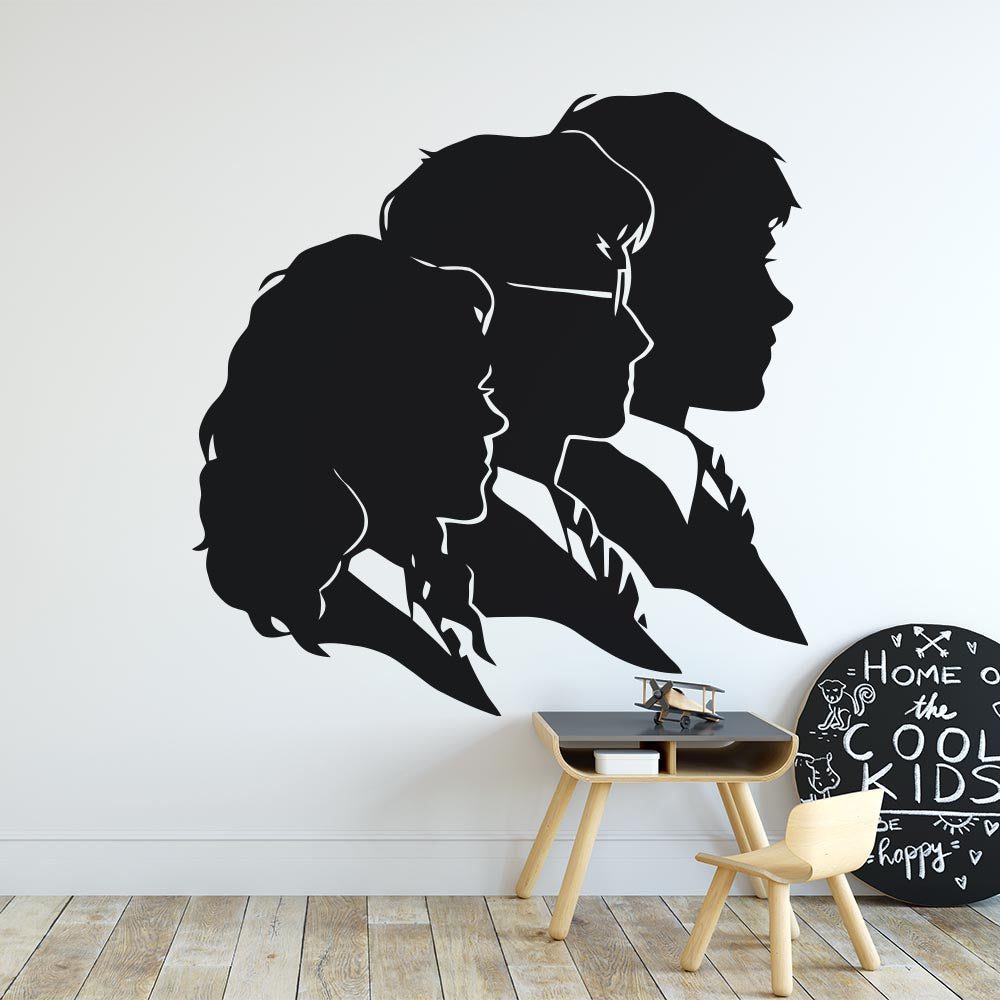
A pale wall with a large dark silhouette can create a strong magical atmosphere while keeping the room practical. Place the design above a low bed or desk, leaving open space around it. Warm bedside lighting and dark blue textiles can suggest an old castle interior without making the room gloomy.
2. Design a celestial reading corner
Stars, moons and spell-like spark shapes are a flexible choice because they work with both obvious fandom décor and more grown-up interiors. Apply the main motif near a bookcase or reading chair, then use navy cushions and a warm lamp to define the zone. Keep the stars grouped intentionally rather than spreading them randomly across every wall.
3. Use a single symbol for a subtle scheme
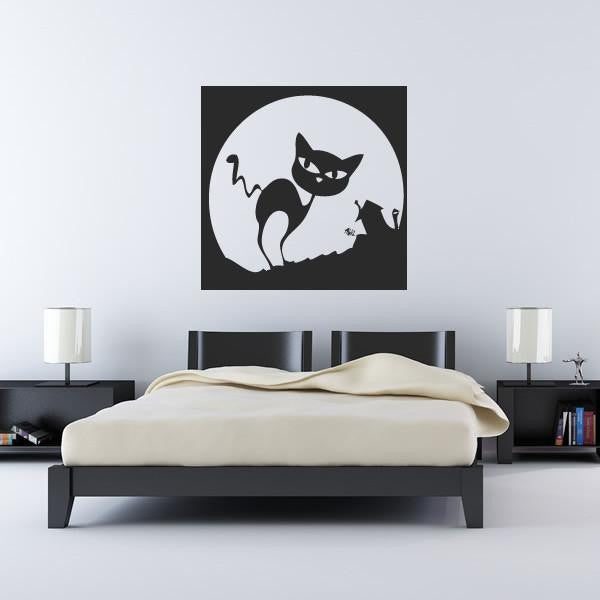
If the room may need to evolve, choose one compact decal rather than building the entire interior around a highly specific scene. Black or charcoal vinyl on a soft grey wall can look graphic and understated. This approach is particularly effective in a study space, guest room or teenager’s bedroom.
4. Frame a desk without adding clutter
A decal can visually anchor a desk while keeping the working surface clear. Centre the design relative to the desk rather than the whole wall. Check that a monitor, shelf or lamp will not hide important parts of it once the room is in everyday use.
5. Build a coordinated fandom room
Rooms that combine several interests need a common visual thread. Use matching vinyl colour, similar motif scale or a shared dark-and-light palette. If the room includes other screen favourites, browse film and movie wall stickers for compatible ideas. For a room shared by a film fan and a gamer, the gaming wall stickers collection offers alternative themes that can be tied together through colour.
6. Make the theme suitable for a younger child
Use one friendly focal motif with uncluttered furniture and accessible storage. A sticker positioned over a toy unit or beside a low bookcase can define a play or reading zone. For broader age-appropriate inspiration, compare designs in the kids’ wall stickers collection.
Step-by-step: plan and apply your chosen design
Magical feature-wall checklist
- Choose the focal area — select the bed, desk, bookcase or reading chair that the decal should visually anchor.
- Measure the available space — record the clear width and height, allowing comfortable margins around furniture and wall edges.
- Check the surface — make sure it is smooth, clean, dry and in good condition; let fresh paint cure first.
- Test the composition — mark the outer dimensions lightly with low-tack masking tape and view the layout from the doorway.
- Prepare the wall — remove dust and allow the surface to dry completely before application.
- Follow the supplied directions — apply the sticker carefully, working in controlled sections and smoothing as directed.
- Finish the scheme — repeat the vinyl colour in only a few accessories so the wall remains the focal point.
Step 1: choose the viewing angle
Stand at the bedroom door and identify the first clear wall you see. A sticker placed on that sightline usually has greater impact than one hidden beside a wardrobe. In a reading corner, however, the best position may be the wall seen while sitting in the chair.
Step 2: select the right scale
A tiny design can look lost above a double bed, while an oversized decal may crowd a narrow alcove. As a starting point, aim for a design that fills a meaningful proportion of the furniture width while retaining visible wall space around it. Always use actual product dimensions rather than judging size from an on-screen image.
Step 3: check contrast
Dark vinyl is easiest to see on a light wall. If the wall is deep navy or charcoal, a similarly dark design may disappear except in strong daylight. Contrast matters more than matching every accessory perfectly.
Step 4: mock up the boundaries
Use low-tack masking tape to mark the intended outer dimensions. This does not reproduce every detail, but it reveals whether the design will compete with shelves, lamps or headboards. Look at the outline from the doorway, bed and desk before committing.
Step 5: prepare and apply
Dust and surface contamination can weaken adhesion. Clean the area appropriately for the paint finish, then let it dry fully. Apply the sticker according to its supplied instructions, taking extra care with narrow details. Larger designs are generally easier to manage with help.
Step 6: add restrained finishing touches
Once the decal is in place, assess the room before buying more décor. Often, a navy throw, warm lamp and small group of books are enough. The goal is a themed room with breathing space, not a collection of competing references.
Common mistakes to avoid
- Choosing by image alone: Check the listed dimensions and measure the actual wall before ordering.
- Applying to fresh paint: Touch-dry does not necessarily mean fully cured.
- Ignoring texture: Heavy texture reduces the area of vinyl touching the wall and may affect the result.
- Using too many motifs: Castle shapes, stars, quotes and character designs can compete when all appear in one small room.
- Placing the design too high: Keep it visually connected to the bed, desk or chair it is intended to anchor.
- Forgetting future furniture: A planned shelf or taller headboard could obscure the decal.
- Expecting the same removal result on every wall: Removal results depend on wall condition, paint quality and how carefully the sticker is removed.
- Treating cut vinyl like a printed poster: Most Apex designs have no clear, white or printed background, so the wall colour becomes part of the finished appearance.
When to choose a different product or approach
A self-adhesive vinyl wall sticker is not the right answer for every surface or room. Consider another approach in these situations:
- The wall is heavily textured, damp, dusty or flaking: Resolve the underlying issue or choose freestanding décor instead.
- The paint is fresh or poorly bonded: Allow proper curing time and assess the finish before applying anything adhesive.
- You rearrange the room frequently: Framed artwork or shelf décor may offer more flexibility.
- You want a multicolour photographic scene: One-colour cut vinyl is intended for crisp silhouettes and shapes, not detailed printed imagery.
- You cannot use adhesive décor: A themed duvet, lamp, rug or freestanding display may be more appropriate.
- The chosen wall has low contrast: Select a different wall, repaint when practical or use non-adhesive accessories that remain visible.
Frequently Asked Questions
What wall colour works best with a Harry Potter wall sticker?
Light grey, white, muted blue and other soft neutral colours provide strong contrast with black, charcoal or dark navy vinyl. The best combination is one where the complete design remains easy to read in normal room lighting.
Can wall stickers be applied to freshly painted walls?
No sticker should be applied until the paint has fully cured. Curing takes longer than surface drying, so follow the paint manufacturer’s guidance and check that the surface is clean and stable.
Will a wall sticker work on a textured wall?
Wall stickers work best on smooth, clean, dry surfaces. Fine texture may still affect contact, while pronounced texture can prevent narrow vinyl details from adhering reliably.
How large should a sticker be above a bed or desk?
It should look connected to the furniture without spanning the entire available wall. Measure the furniture width, mark the proposed decal boundaries with low-tack tape and compare those dimensions with the product listing.
Can I remove the sticker later?
Careful, slow removal is generally preferable to pulling quickly, but outcomes vary. Removal results depend on wall condition, paint quality and how carefully the sticker is removed.
Find a design for your magical room
Start with one strong focal point, measure carefully and let the wall colour form part of the design. If you are planning a bedroom, study or reading-corner update, browse the Harry Potter wall stickers collection for self-adhesive, one-colour designs that work best on smooth, clean, dry walls.