


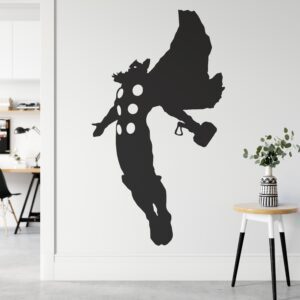

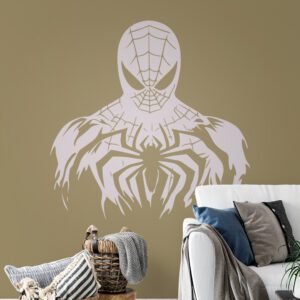

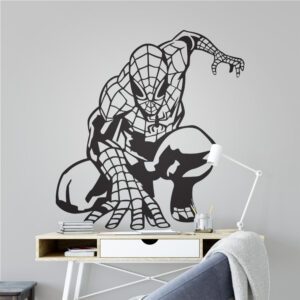
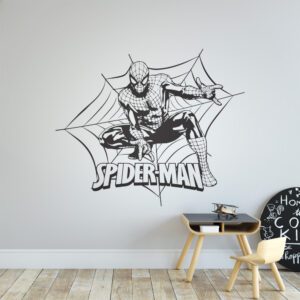


Looking for Doctor Who wall sticker ideas that feel like part of your room rather than a wall full of merchandise? Start with the space you have, the mood you want and the size of decal your wall can comfortably hold. A single-colour vinyl silhouette can make a strong focal point without needing a printed background, whether you are decorating a bedroom, study or TV corner.
The most useful question is not simply which design you like best. It is where the sticker will be seen from, what furniture sits below it and whether the wall is suitable for self-adhesive vinyl. This guide offers practical layout ideas, a simple way to plan your placement and the trade-offs to consider before you choose.
Quick answer: which idea suits your room?
For an understated Doctor Who-inspired room, choose one focal wall and let a dark, single-colour decal do the work. A compact motif above a desk suits a smaller space; a wider silhouette above a sofa or bed needs more uninterrupted wall. If you prefer a broader sci-fi feel to an overt TV theme, abstract stars, geometric shapes or a dramatic cityscape-style silhouette may be easier to live with as the room changes.
Browse the Doctor Who wall stickers collection to see which actual designs suit your space before planning around a particular motif. Check each listing for its shape and dimensions: a tall design and a wide design can look very different even when their stated widths seem similar.
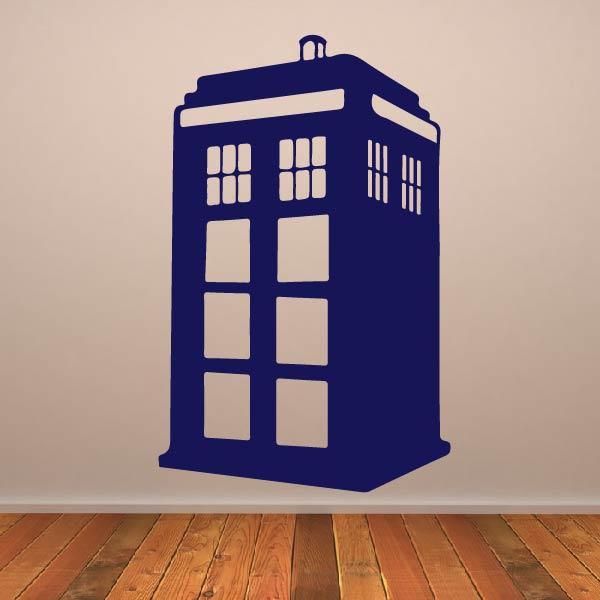
| Room or spot | Idea to explore | Main trade-off |
|---|---|---|
| Bedroom above a headboard | One centred silhouette with breathing space | Check that pillows and the headboard do not hide its lower edge |
| Study or desk wall | A smaller motif visible above the monitor | A busy desk can compete with a detailed design |
| Living-room TV corner | An off-centre decal on the adjacent wall | Strong graphics directly behind a screen may distract |
| Hallway or reading nook | A compact design on an uninterrupted section | Narrow walls limit the size and viewing distance |
What you need before you start
You do not need to commit to a full room makeover. First, identify a smooth, clean, dry wall with enough clear area for the complete design. Self-adhesive vinyl wall stickers work best on that kind of surface. Textured finishes, damp patches, loose or flaky paint and dusty walls can make application less reliable. Freshly painted walls should cure before you apply a sticker; follow your paint manufacturer’s guidance rather than relying on a universal waiting period.
- A shortlist of designs: compare the shapes and stated dimensions of designs you genuinely like, rather than choosing on theme alone.
- Wall measurements: note the usable width and height between furniture, shelves, switches and edges.
- A viewing position: stand where you will normally enter or sit; a placement that looks balanced close up may feel too high from across the room.
- A temporary layout: lightly mark the planned footprint with removable paper or another method appropriate for your paint, without leaving marks on the finish.
- Surface checks: clean and dry the intended area and assess paint condition before applying.
Most Apex wall stickers are cut from one-colour vinyl, with no clear, white or printed background. Once applied, their shapes can create a clean painted-on look. The wall colour will show around the design and through any cut-out areas, so contrast matters: a dark decal will usually stand out more clearly against a pale wall than against deep navy paint.
Step-by-step: plan a Doctor Who-inspired feature wall
1. Decide how strongly themed the room should feel
Start with the person who uses the room. For a dedicated fan’s bedroom, a recognisable design from the Doctor Who collection can be the centrepiece. For a shared living room, a smaller accent may work better alongside neutral furniture and existing artwork. You can also keep the wall treatment subtle and bring in themed accessories that are easier to change later.
Think about how long you want the look to last. A large focal decal commits more visual space to the theme; a modest design lets the room grow with changing tastes. Neither is automatically the better buy: the right choice depends on whether you want the wall to lead the room or simply add a fan detail.
2. Choose a wall with clear sightlines
Good candidates include the wall behind a bed, the space above a desk or an open section beside a reading chair. Look for an area where the entire sticker will be visible from the doorway. Avoid squeezing a design between a tall wardrobe and a doorframe just because the measurements technically fit. A little clear wall around the edges makes the silhouette easier to read.
If the room has a television, consider the side wall or the area above a low unit rather than placing a high-contrast design immediately behind the screen. For a child’s room, check that the chosen position is practical around furniture and day-to-day activity. Keep the layout focused: one strong decal usually makes a clearer statement than several unrelated motifs scattered across the wall.
3. Match the decal shape to the available space
Measure the empty wall area, not the full wall width. Leave room above furniture and clear of light switches, curtain edges or shelving. A wide design generally needs a broad, low visual anchor such as a sofa or bed; a more upright silhouette can suit a narrower section. Use the dimensions on the individual product listing to judge fit, and sketch its outer footprint on paper if you are unsure.
For an above-bed arrangement, aim for a visible gap between the headboard and the bottom of the graphic. Over a desk, check what the monitor, lamp and shelves conceal when you are seated. A decal that is perfectly centred on an empty wall can seem awkward once the furniture is back in place, so judge the whole scene rather than the wall in isolation.

4. Set a palette that helps the design read
A dark single-colour design against a soft neutral wall gives a crisp silhouette. White, warm grey and navy accessories can support a sci-fi-inspired scheme without making every object themed. If your wall is already dark, compare the available vinyl colour against it before buying; low contrast may make fine details less noticeable from across the room.
Try repeating one or two colours in cushions, a throw or a desk accessory, then stop. This gives the feature wall a place in the room without turning the space into a display. For a bedroom that doubles as a workspace, restrained colours can keep the result comfortable for everyday use.
5. Test the layout before applying
Mark out the design’s approximate width and height on the wall using a method suitable for your finish. Step back, sit in the places you use most and check that the graphic will not be cut off visually by furniture or hidden when a door is open. Confirm that the wall is smooth, clean and fully dry, and that any new paint has cured.
Then follow the directions supplied with your chosen sticker. Take your time positioning it before applying pressure, particularly if its silhouette has narrow or detailed sections. Surface condition and paint quality affect both application and later removal. Removal results depend on wall condition, paint quality and how carefully the sticker is removed.
Five-point feature-wall checklist
- Choose the mood — decide between a bold fan focal point and a quieter themed accent.
- Pick the position — find a smooth, clean, dry wall visible from your usual viewing spot.
- Check the fit — compare product dimensions with clear wall space, not total wall size.
- Test the contrast — make sure the vinyl colour reads against the paint and nearby décor.
- Preview, then apply — mark the approximate footprint, check sightlines and follow the product directions.
More Doctor Who wall sticker ideas by space
A bedroom with one clear focal point
Keep the bed wall simple: one decal, plain bedding and a small number of coordinating accents. This approach gives a themed bedroom personality without making it feel visually crowded. If the wall is interrupted by lamps or shelves, consider a smaller design to one side rather than forcing a large graphic into the centre. A compact sticker can still feel intentional when it lines up with the headboard or a bedside unit.
A study with a subtle fan detail
In a home office or study, treat the decal as part of the desk composition. Place it where it remains visible above or beside the monitor and keep the surrounding wall relatively clear. This is useful if the space needs to feel calm during work but still reflect a favourite show. If your desk area already contains prints and collectibles, choose one focal wall element rather than adding another dense cluster.
A reading corner with a sense of escape
An armchair, a lamp and a small section of open wall can make a convincing themed nook. The design does not have to fill the entire space: a smaller silhouette above the chair or beside a bookshelf can create a destination within a larger room. Check how the decal looks from the doorway and from the chair; a sticker tucked too far behind shelving may barely be seen.
A shared room that can change later
For a living room or shared bedroom, let the wall sticker be the only overtly themed element. Neutral furniture helps it stand out while leaving you free to swap cushions or accessories over time. If a dedicated Doctor Who design feels too specific for everyone using the space, compare the broader film and movie wall stickers collection for other screen-inspired directions.
Common mistakes to avoid
- Choosing by theme without checking dimensions: a favourite design may be the wrong shape for the available wall. Check its full footprint before ordering.
- Placing it too high: leave enough space above the decal as well as below it. View the position from where you normally sit, not only while standing beside the wall.
- Ignoring the wall finish: textured, dirty, damp or poorly bonded paint can affect how well vinyl applies. Start with a suitable smooth, clean, dry surface.
- Applying to fresh paint too soon: allow paint to cure in line with its manufacturer’s instructions before applying a sticker.
- Overcrowding the composition: shelves, posters and a large decal can all compete for attention. Give your chosen design space to be seen.
- Assuming removal will be identical on every wall: paint quality and wall condition vary. Removal results depend on wall condition, paint quality and how carefully the sticker is removed.
When to choose a different product or approach
A wall sticker may not be the best choice if the only available wall is heavily textured, damp, dusty or covered in unstable paint. Address the surface first or choose a suitable decorative item that does not rely on adhesion to that wall. If you have just redecorated, wait until the paint has cured before reconsidering a sticker.
You may also prefer a different collection if you want the mood of a fandom room without making one show the defining feature. The gaming wall stickers collection is worth comparing for a game-focused desk or teen bedroom, while the broader wall stickers collection offers other themes for a more flexible room scheme. These are not substitutes for a specific Doctor Who design if that is what you really want; they are useful alternatives when the room, its users or its future use call for something less specific.
If you want a large, colourful scene with printed detail across most of the wall, a one-colour cut-vinyl silhouette will give you a different result. Its strength is a clean graphic shape rather than a full-colour illustration. Decide which effect you want before choosing a product, especially if you are planning the rest of the décor around it.
Frequently Asked Questions
Where should I put a Doctor Who wall sticker in a small bedroom?
Look for one clear area above a desk, bed or chest of drawers. Measure the unobstructed space and compare it with the individual sticker dimensions; a smaller, well-positioned design often looks better than a larger one squeezed between furniture.
Will a single-colour wall sticker stand out on a dark wall?
It depends on contrast between the vinyl and paint. A dark decal can be harder to see on a dark wall, particularly if it has fine detail. Compare colour options and consider a lighter wall or a different position if the silhouette is not clear.
Can I apply a wall sticker to newly painted walls?
Wait until the paint has cured according to the paint manufacturer’s guidance. The surface should also be smooth, clean and dry before you apply the sticker.
Can I remove the sticker if I change my room later?
Self-adhesive wall stickers can be removed, but outcomes are not identical on every surface. Removal results depend on wall condition, paint quality and how carefully the sticker is removed.
Should I choose a show-specific design or a broader theme?
Choose a show-specific design when you want it to be the room’s focal point. For a shared space or a room likely to change purpose, a smaller themed accent or a more general screen-inspired design may offer more flexibility.
Find the right focal point for your room
The best Doctor Who wall sticker ideas begin with an honest look at the wall: its condition, clear space and the view from where you will spend time. Once you know whether you want a bold centrepiece or a subtle accent, you can choose a design that fits rather than forcing a layout around it. If you are ready to compare options, browse Doctor Who wall stickers and check the individual dimensions against your smooth, clean, dry wall.