







Scandinavian wall decal ideas are a simple way to bring calm shapes, clean contrast and a more considered look to a room without filling it with extra furniture or accessories. The most convincing schemes use restraint: one well-placed, single-colour decal, a soft neutral wall and a small number of natural or functional furnishings. Whether you are updating a living room, bedroom, nursery or home office, the right design can make an empty wall feel intentional while preserving the light, uncluttered character associated with Nordic interiors.
Quick answer: which Scandinavian wall decal should you choose?
Choose a decal that repeats shapes or tones already present in your room. Organic leaves, simple trees and understated line-style motifs soften spaces containing angular furniture. Arches, circles, triangles and abstract compositions suit more contemporary rooms. Stars, clouds, moons and friendly animal silhouettes work well in Scandinavian-inspired nurseries and children’s bedrooms.
For the most cohesive result, use one dark neutral colour—such as black, charcoal or navy—against a white, pale grey or muted wall. Scale matters too: a decal above a sofa or bed should feel substantial enough to relate to the furniture, while a smaller motif is better for a reading corner, desk area or narrow wall.
- Best for living rooms: botanical silhouettes, restrained geometric forms or an abstract focal arrangement.
- Best for bedrooms: gentle organic lines, celestial motifs or a balanced design above the headboard.
- Best for nurseries: clouds, stars, moons, woodland animals and simple trees.
- Best for home offices: crisp geometric compositions or a minimal motif beside the desk.
- Best for awkward spaces: compact vertical decals, scattered shapes or small grouped motifs.
What you need before you start
Begin with the room rather than the sticker. Note the wall colour, available width, furniture position and the shapes already present. Scandinavian style does not mean that every surface must be white; pale grey, muted blue, soft green and warm off-white can all provide an effective backdrop. The important qualities are visual calm, useful negative space and a limited palette.
You will need a smooth, clean and dry surface. Check for dust, grease, flaking paint, damp, pronounced texture or loose wallpaper before choosing a position. Self-adhesive vinyl generally performs best on a sound, smooth painted wall. Freshly painted walls should be allowed to cure before stickers are applied; follow the paint manufacturer’s curing guidance rather than relying on a surface that merely feels dry.
It is also useful to have:
- The decal’s full dimensions, including any separate elements.
- A tape measure for checking the available area.
- Low-tack masking tape or removable paper markers for testing the outline.
- A clean, soft cloth for removing surface dust.
- A second person for positioning a wide or intricate design.
- Enough clear space around the decal for it to remain visually distinct.
Before ordering, look at your wall from the main entrance and from the seat or bed where it will be viewed most often. A position that appears centred when standing close to the wall can look unbalanced from across the room.
Scandinavian wall decal ideas for different rooms
1. Create one quiet focal point above a sofa
A large botanical silhouette, abstract branch or balanced arrangement of simple shapes can replace a cluster of small decorations above a sofa. Position the decal in relation to the furniture rather than centring it automatically on the entire wall. The composition should connect visually with the sofa while retaining space around its outer edges.
Black creates the strongest graphic effect. Charcoal or dark navy can feel slightly softer, particularly alongside warm grey upholstery, pale timber and white walls. Avoid surrounding the decal with numerous shelves, frames and ornaments; its clean painted-on appearance works best when it has room to breathe.
2. Use geometric forms in a modern Nordic scheme
Triangles, polygons, circles and asymmetric line arrangements introduce structure without ornate detail. They work especially well with slim furniture, flat-front cabinets and simple lighting. Browse geometric and polygonal wall stickers if your room already contains angular forms or you want a sharper contemporary interpretation of Scandinavian style.
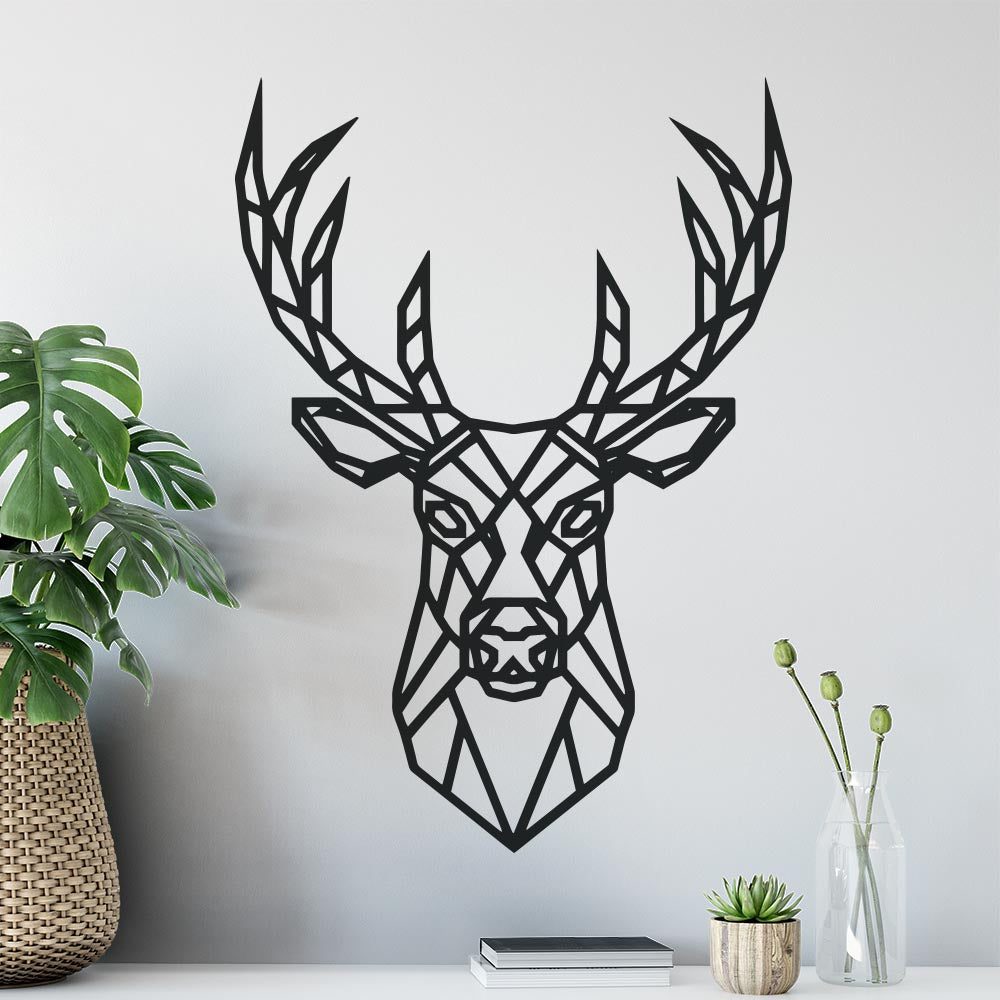
There are two useful approaches. A single large geometric design becomes the focal point, while a small group of repeated shapes can connect separate areas of a wall. Keep spacing deliberate; random-looking placement can make a calm room feel unfinished rather than relaxed.
3. Add soft curves with arches and colour-block effects
Rounded forms provide contrast in rooms dominated by rectangular furniture. An arch behind a bedside table, chair or compact desk can visually define that area. A circle or overlapping abstract form can also make a small piece of furniture feel more grounded.
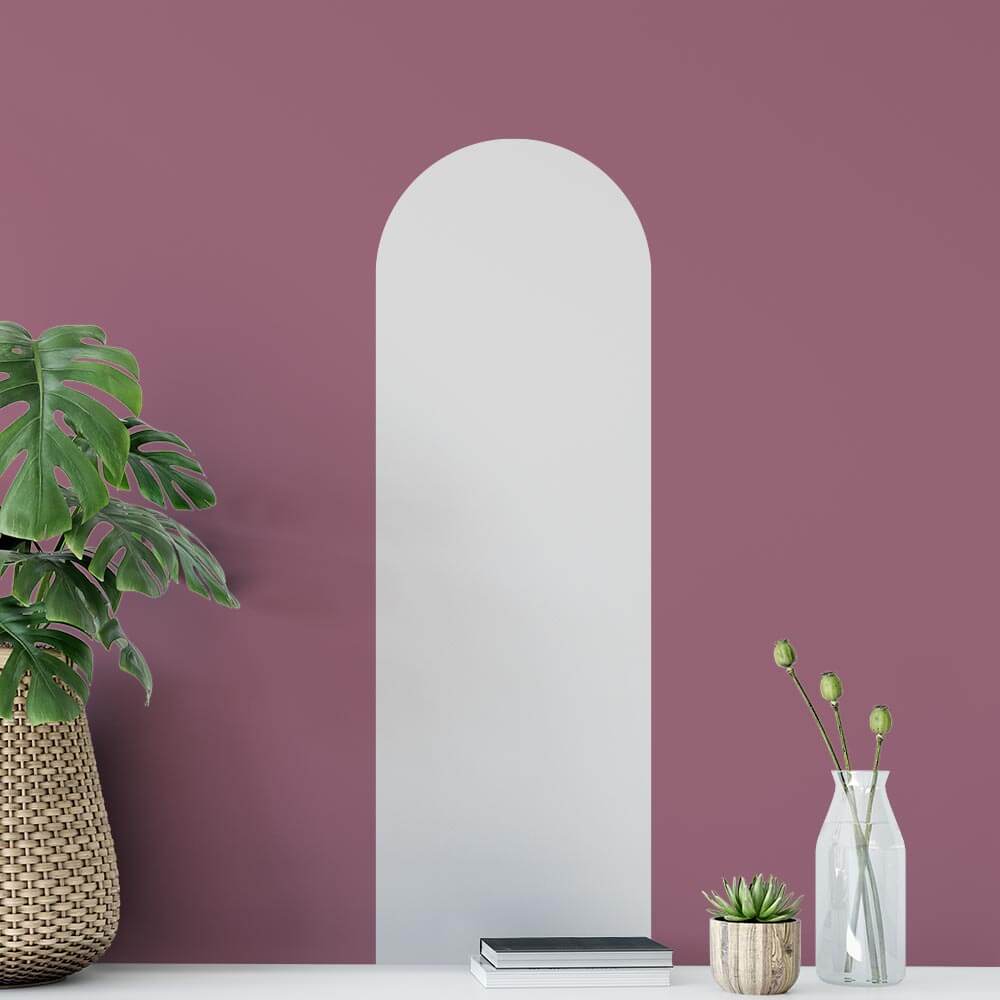
If you want broader shapes rather than detailed silhouettes, compare the options in the colour-block wall stickers collection. Keep the rest of the wall relatively simple so the block form reads as a deliberate design feature rather than one element in a busy pattern.
4. Build a calm Scandinavian nursery
Stars, clouds, crescent moons, simple animals and stylised woodland forms suit a Nordic nursery because they are playful without requiring bright printed scenes. Place a larger motif above a chest, reading corner or low storage unit, away from areas that receive frequent knocks or rubbing.
A scattered arrangement can work, but establish boundaries first. Confine the shapes to a loose circle, gentle arc or defined section of wall. This preserves negative space and prevents the scheme from resembling all-over wallpaper. For a room that needs to adapt as a child grows, restrained animal or celestial silhouettes are generally more versatile than age-specific themes.
5. Frame a home-office zone
A compact geometric decal above or beside a desk can mark the work area without taking up floor space. An asymmetric design is useful when shelving or a lamp already occupies one side of the desk. For a formal workspace, choose crisp lines; for a softer study corner, use a leaf, branch or curved abstract motif.
Keep detailed designs clear of monitor edges and visually busy noticeboards. Leaving a visible gap between the screen and decal makes both elements easier to read and stops the desk wall from feeling crowded.
6. Make awkward walls feel intentional
Narrow sections beside wardrobes, sloping bedroom walls and spaces between doors often look too small for conventional artwork. A vertical branch, falling leaves or stacked geometric motif can suit these areas. Measure the narrowest usable width and keep all parts of the decal inside it rather than allowing individual elements to disappear behind furniture.
In a hallway, a slim design can guide the eye without reducing practical circulation space. Choose strong contrast because these areas often receive less natural light, but avoid covering every empty section. One clear accent is usually more effective than several unrelated motifs.
7. Echo natural materials rather than copying them
Scandinavian interiors often combine pale wood, wool, linen and woven textures. A single-colour leaf, tree or landscape-inspired silhouette can reinforce that connection to nature without trying to imitate the materials. The flat vinyl finish creates a graphic counterpoint to tactile fabrics and timber grain.
Repeat one or two visual cues. For example, pair a curved botanical form with a round lamp and woven basket, or combine a precise polygonal decal with a slim-legged desk. Repetition makes the scheme cohesive; matching every object too closely can make it look staged.
How to plan and apply your Scandinavian wall decal
Good placement contributes as much as the design itself. Work from the furniture, test the scale and confirm that the surface is suitable before applying the decal. Most Apex designs are cut from one-colour self-adhesive vinyl, with no clear, white or printed background. Once applied, the wall shows through the open areas, helping the decal achieve a clean, painted-on appearance.
Step-by-step Scandinavian decal checklist
- Choose the focal area — relate the design to a sofa, bed, desk or reading chair rather than treating the wall in isolation.
- Measure the usable space — allow clear margins around the complete decal and check for switches, shelves and doors.
- Mock up the outline — use removable paper markers or low-tack tape to test the width and height from normal viewing positions.
- Check the wall — the surface should be smooth, clean, dry and sound; let fresh paint cure fully before applying a sticker.
- Clean and dry the area — remove dust and residue without leaving moisture or cleaning product on the wall.
- Plan separate elements — mark a loose boundary and arrange larger shapes first to keep spacing balanced.
- Apply carefully — follow the product guidance, work gradually and smooth the vinyl with controlled pressure.
- Review from across the room — check the final balance before adding nearby accessories or further wall decoration.
How to balance size, contrast and negative space
A common mistake is choosing a design that looks substantial on a product page but becomes visually lost on a broad wall. Measure in centimetres and mock up the actual dimensions. Do not estimate by looking at an image alone, as furniture scale and photography can alter your perception.
- Above wide furniture: use a design with enough horizontal presence to connect to the item below it.
- On a narrow wall: favour vertical or compact compositions.
- In a small room: one medium focal design often feels calmer than many tiny decals.
- On a pale wall: black, charcoal and dark navy provide clear definition.
- On a deeper wall colour: check that your chosen vinyl creates sufficient contrast before buying.
Negative space is an active part of Scandinavian composition. Leave a clear border around the decal and avoid placing its outermost details immediately against a ceiling, corner or furniture edge. If a design includes several separate elements, use fewer pieces or increase their spacing rather than filling every gap.
Common mistakes to avoid
Using too many motifs
Leaves, mountains, stars and geometric shapes can all suit Scandinavian décor, but combining them on one wall weakens the visual hierarchy. Select one theme and let supporting textiles or objects repeat it subtly.
Choosing a decal that is too small
A tiny decal placed above a large sofa or double bed can appear disconnected. Test its full-size outline before ordering and consider the relationship between the wall feature and the furniture below.
Placing the design too high
Wall décor often feels most coherent when it relates clearly to nearby furniture. Leave breathing space, but do not push the decal close to the ceiling unless the design is intended to create height on a narrow wall.
Applying to a poor surface
Dusty, damp, rough or unstable walls can affect adhesion. Matt, heavily textured or specialist paint finishes may also behave differently, so assess the surface and paint quality first. A freshly painted wall must be given time to cure.
Overfilling a scattered arrangement
Separate stars, dots or abstract shapes can gradually spread across more of the wall than planned. Establish an outer boundary and position the largest elements first. Stop while generous gaps remain.
Expecting every room to need strong contrast
Black-on-white is classic, but it is not the only route. Dark navy on pale grey or charcoal on muted blue can create a gentler effect. The colour still needs enough contrast for fine details to remain visible.
When to choose a different product or approach
A vinyl decal is not the best answer for every surface or design goal. Choose framed artwork if you want something that can be moved frequently between rooms. Consider paint if you need an exact custom shade, a large edge-to-edge arch or a feature that must wrap around corners. Wallpaper may be more suitable when you want a continuous pattern across an entire wall.
A different approach may also be preferable when:
- The wall is heavily textured, flaky, damp or dusty.
- The paint is fresh and cannot be left to cure before the planned update.
- You want a multicolour illustration, photographic detail or a full-wall printed scene.
- The area receives repeated abrasion, steam or direct splashes.
- You intend to reposition the decoration regularly.
- You cannot confirm that the existing paint layer is stable.
Surface condition and paint quality influence both application and later removal. Removal results depend on wall condition, paint quality and how carefully the sticker is removed. If you are uncertain about a particular finish, assess it carefully before committing to a prominent or extensive design.
Frequently Asked Questions
What colours work best for Scandinavian wall decals?
Black, charcoal and dark navy work well on white, pale grey and muted walls because they provide clean contrast. Choose a vinyl colour that relates to existing details such as lamp frames, handles, cushions or furniture legs.
Can I use a Scandinavian decal in a small room?
Yes. One appropriately scaled focal decal can make a small room feel more resolved without using floor space. Avoid many unrelated motifs and preserve clear wall space around the design.
Do Scandinavian wall stickers have a clear background?
Most Apex wall stickers are cut from one-colour vinyl and have no clear, white or printed background. The open areas reveal the wall beneath, which creates a clean, painted-on effect once the design is applied.
Can I apply a wall decal to freshly painted walls?
Not immediately. Paint should be allowed to cure fully before a sticker is applied. Check the paint manufacturer’s guidance, as curing time varies by product and conditions.
Are wall decals suitable for textured walls?
They work best on smooth, clean, dry surfaces. Pronounced texture can reduce the contact area and affect the finished appearance, so another decorating approach may be more suitable for rough walls.
Find a calm design for your space
The strongest Scandinavian wall decal ideas combine useful scale, clear contrast and disciplined placement. Start with one focal area, echo the room’s existing forms and leave enough negative space for the design to feel calm rather than crowded.
For a focused selection of clean, nature-led and geometric designs, browse our Scandinavian wall stickers collection. You can also explore the wider wall stickers collection to compare themes for living rooms, bedrooms, nurseries and workspaces.