



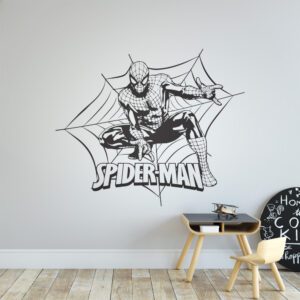


Bedroom makeover ideas for children who change interests quickly need to balance personality, cost and flexibility. A child who wants dinosaurs today may prefer football, space or gaming next year, so decorating the whole room around one theme can create more work than expected. The practical solution is to keep expensive elements neutral and use smaller, replaceable layers to express their current interests.
Self-adhesive wall stickers can be useful within this approach. Apex designs are cut from one-colour vinyl and usually have no clear, white or printed background, creating a clean, painted-on appearance once applied. However, suitability depends on the wall surface, paint condition and how often you expect to change the design.

Quick answer: create a neutral room with changeable themed layers
For a bedroom that can adapt as your child grows, use a simple base colour for the walls and larger furniture. Add personality through wall stickers, bedding, cushions, storage boxes, lampshades and inexpensive prints. When their interests change, you can update selected details rather than repainting or replacing the entire room.
A good starting formula is:
- 70% long-term base: walls, flooring, bed, wardrobe and main storage.
- 20% adaptable colour: curtains, bedding, rugs and storage accessories.
- 10% current interest: wall stickers, artwork, toys and collectables.
This approach helps the room feel personal without allowing a short-lived theme to dominate every surface. Explore the kids’ wall stickers collection for one-colour designs that can provide a clear focal point without covering the whole room.
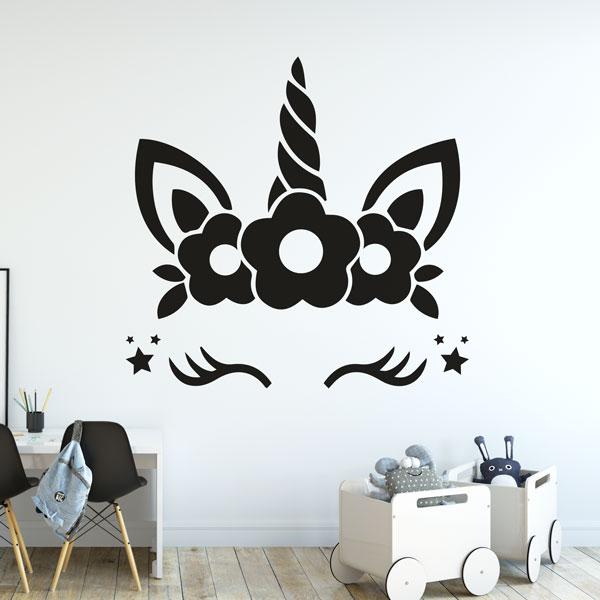
What you need before you start
You do not need to replace everything. Begin by reviewing what can stay, what can be adapted and which items are closely tied to an old theme.
A flexible base
Soft neutral walls, white furniture, warm grey textiles and natural wood finishes work with many themes. Neutral does not need to mean plain or colourless: muted blue, pale green or soft grey can provide character while remaining adaptable.
A simple room plan
Measure the available wall space above the bed, desk or reading corner. Note doors, sockets, shelving and sloping ceilings. A paper template cut to the approximate decal dimensions can help you judge scale before ordering.
A suitable surface
Wall stickers work best on smooth, clean, dry surfaces. Heavily textured walls, flaking paint, damp areas and dusty finishes may reduce adhesion or produce an uneven result. Freshly painted walls should be allowed to cure fully according to the paint manufacturer’s guidance before a sticker is applied.
A realistic update budget
Decide whether you are making a small seasonal refresh or a more complete room update. Retaining the existing bed, wardrobe and flooring usually makes the biggest difference to the budget. Spend on durable essentials; use lower-cost items for themes that may be temporary.
Your child’s input, with sensible boundaries
Offer two or three parent-approved choices rather than asking an entirely open question. For example, let your child choose between a space decal, a star design and a personalised name sticker, while you retain control over size, wall position and budget.
Compare flexible bedroom decorating options
| Option | Best for | Main trade-off |
|---|---|---|
| One-colour wall stickers | A defined theme or focal point | Surface and paint condition affect application and removal |
| Bedding and cushions | Fast colour and character changes | Licensed or highly themed sets can date quickly |
| Framed prints | Artwork that can be swapped | Frames require suitable fixings or stable display surfaces |
| Painted feature wall | A long-lasting colour update | Changing it later requires preparation and repainting |
| Wallpaper | A detailed, room-defining pattern | More time-consuming and costly to change |
| Display shelves | Rotating toys, books and collections | Can look cluttered without regular editing |
Step-by-step bedroom makeover plan
A flexible makeover checklist
- Remove the old theme — take down temporary accessories and separate reusable items from anything your child has outgrown.
- Keep the costly elements neutral — retain adaptable furniture, flooring and wall colours wherever possible.
- Choose one focal area — use the wall above a bed, desk or reading corner rather than spreading a theme across every wall.
- Select a broad theme — stars, animals, sport, music or simple geometric shapes often remain relevant longer than a very specific character.
- Check and prepare the surface — make sure the chosen area is smooth, clean, dry and free from loose paint.
- Apply the wall sticker carefully — plan its position, follow the supplied directions and smooth the vinyl progressively.
- Add two or three matching accessories — coordinate bedding, a cushion or storage rather than buying a complete themed furniture set.
- Leave room for change — keep some shelves and wall space available for new interests, artwork and achievements.
1. Edit the room before buying anything
Remove broken toys, outgrown clothes and old decorative items. This gives you an accurate picture of the space and prevents the new scheme from competing with several previous themes. Keep versatile baskets, plain lamps and solid-colour textiles that can be reused.
2. Pick a colour palette that can support several interests
Choose two base colours and one accent colour. Dark navy, white and warm grey can suit space, sport, transport, music and gaming-inspired rooms. Soft green, charcoal and white can work with animals, woodland, dinosaurs or nature themes. The accent colour can then change through bedding or accessories.
3. Choose a theme with room to grow
Broad visual themes often last longer than a single television, film or game character. A child interested in space may enjoy stars, planets and rockets without needing every item to match. A young sports fan might prefer a dynamic ball or player silhouette that still works if their favourite team changes.
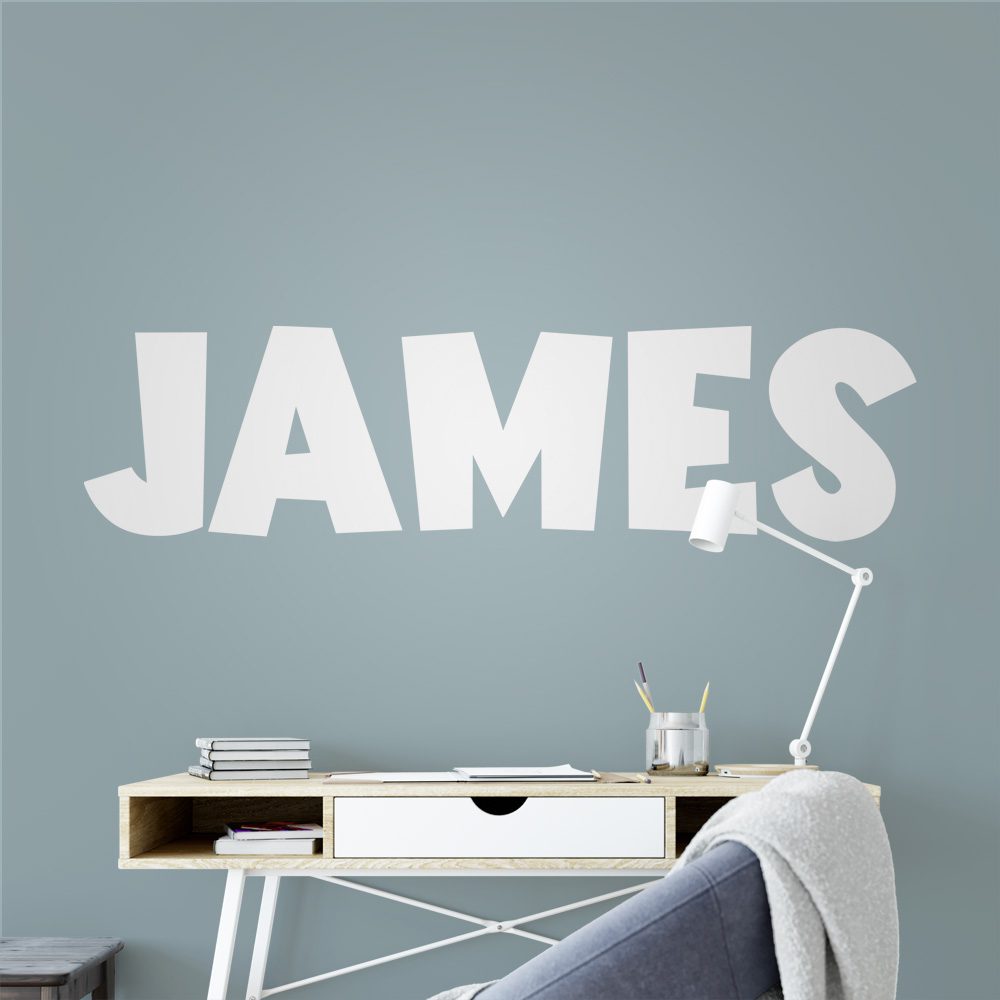
If names are likely to remain the most personal part of the room, consider the personalised name wall stickers collection. A name design can sit alongside changing bedding, toys or artwork without locking the room into one hobby.
4. Create one clear focal point
A single focal wall usually looks more considered than many small decorations spread around the room. Position a decal above low furniture, beside a reading corner or on an open wall where the whole shape can be seen. Avoid placing it where a future tall bookcase or wardrobe is likely to cover it.
Check the product dimensions against the wall rather than judging size only from a product image. The same sticker can feel very different above a single bed and on a wide, empty wall.
5. Prepare and apply the sticker correctly
Wipe away dust with an appropriate lint-free cloth and allow the surface to dry. Plan the position before removing any backing. For detailed directions, follow the quick wall sticker application guide.
One-colour cut-vinyl designs do not usually have a printed rectangular background. Once applied, the wall remains visible through and around the design, helping the finished result blend with the room rather than resemble a poster.
6. Repeat the theme lightly
Use only a few coordinating details. For example, pair a star wall sticker with navy bedding and one moon-shaped cushion. Pair an animal silhouette with a soft green throw and two framed drawings. Repeating a colour or shape is usually enough to make the room feel coordinated.
7. Store future options rather than overdecorating
Leave open display space for school projects, trophies, new books and changing collections. A room that is completely filled around one theme has less capacity to reflect the child’s next interest.
8. Review the room every six to twelve months
Ask which items your child still enjoys and which no longer feel relevant. Small, regular edits can prevent the need for a major makeover. If a decal is eventually removed, work slowly and consult the wall decal removal guide before starting. Removal results depend on wall condition, paint quality and how carefully the sticker is removed.
Common mistakes to avoid
Building the whole room around a short-lived character
Character beds, themed wardrobes, curtains, rugs and wallpaper may all need changing together when interest fades. Keep the permanent pieces versatile and express the theme through selected accessories instead.
Choosing a sticker before checking the wall
A design may be visually perfect but unsuitable for a rough, damp or unstable painted surface. Inspect the wall first. Paint quality and surface texture matter as much as the decal design.
Buying too small for the available space
A tiny design can look lost above a bed or wide desk. Measure the wall and create a simple paper outline to assess the visual footprint. Equally, do not choose a decal so large that it competes with shelves, furniture or curtains.
Using too many competing themes
Dinosaurs, football, gaming and space can each work well, but combining all four equally may make the room feel busy. Choose one current theme and support it with a restrained colour palette.
Applying vinyl to fresh or poor-quality paint
Fresh paint requires adequate curing time. Loose, chalky or flaking paint should be addressed before decorating. Do not assume that every painted surface will respond in the same way during application or later removal.
Making every decision without the child
The room should reflect the person using it. Giving children a controlled choice can increase their attachment to the finished space while preventing impractical purchases.
When to choose a different product or approach
Wall stickers are not the right choice for every bedroom. Choose another approach when:
- The wall is heavily textured: framed art, freestanding decorations or themed textiles may sit more reliably.
- The paint is loose or fragile: address the surface condition first, or avoid adhesive decoration on that area.
- The room is damp: investigate and resolve the cause rather than covering the affected wall.
- Your child changes preferences every few weeks: rotating bedding, shelf displays or framed drawings may be more practical than repeatedly changing decals.
- You want a detailed multicolour scene: Apex wall stickers are one-colour cut-vinyl designs, so wallpaper or printed artwork may better suit a highly detailed illustration.
- You rent and are unsure about the paint: ask the landlord or managing agent where necessary and consider non-adhesive accessories. Test decisions should account for the condition and quality of the existing finish.
If you prefer a design that is not specifically child-themed, browse the wider wall stickers collection for simple shapes, motifs and styles that may remain suitable as your child gets older.
Create a room that can change without starting again
The most useful bedroom makeover ideas for children who change interests quickly are based on layers. Keep walls and furniture adaptable, choose one focal area, and add the current theme through a limited number of details. This gives children meaningful input while helping parents avoid replacing an entire coordinated scheme whenever a new interest appears.
For a flexible focal point, explore our collection of kids’ wall stickers. Check the product size and your wall condition carefully before choosing a design.
Frequently Asked Questions
What bedroom themes are children less likely to outgrow quickly?
Broad themes such as stars, animals, sport, music, transport and geometric shapes often have more longevity than a specific character. A restrained colour palette also makes the theme easier to adapt.
Can wall stickers be applied to any painted wall?
No. They work best on smooth, clean, dry surfaces with sound paint. Texture, dust, moisture, fresh paint and weak finishes can affect adhesion and the eventual removal result.
How can I judge the right wall sticker size?
Measure the open wall area and mark the product dimensions with removable paper shapes before ordering. Consider nearby beds, shelves, doors and curtains so the decal has enough clear space around it.
Are personalised name stickers flexible enough for a changing room?
A name design is not tied to a particular hobby, so it can often remain while bedding, colours and accessories change. Choose a type style and colour that can work with several future themes.
How should I remove a wall sticker when my child wants a new theme?
Follow the removal guidance, work slowly and avoid pulling abruptly. Removal results depend on wall condition, paint quality and how carefully the sticker is removed.
Ready to plan an adaptable update? Browse kids’ wall stickers for bedrooms and choose a design that suits your child’s current interests while working with a flexible long-term colour scheme.