


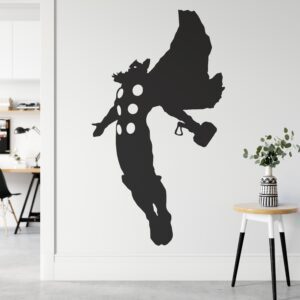



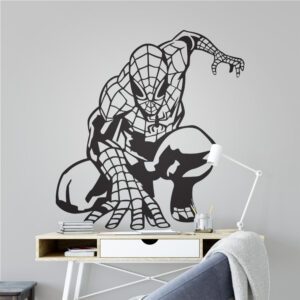
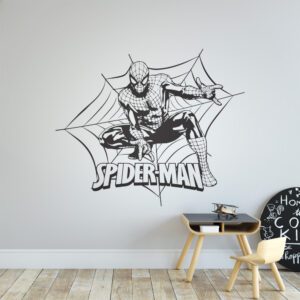


You’ve found the perfect design, picked the spot, and then the question lands – do wall decals damage paint? It’s a fair concern, especially if you’re decorating a rented flat, refreshing a child’s bedroom, or adding personality to a freshly painted wall you do not want to ruin. The short answer is usually no, but the real answer depends on the wall, the paint, and how the decal is applied and removed.
That “it depends” part matters. A good quality vinyl wall decal is designed to adhere well without behaving like permanent glue. On a sound, properly prepared painted surface, it should come away cleanly. Problems tend to happen when the paint underneath is old, cheap, flaky, newly applied, or not fully bonded to the wall in the first place.
Do wall decals damage paint on every wall?
No, not on every wall. In many homes, wall decals can be applied and removed without leaving any obvious damage behind. That is one of the big reasons they are so popular. They give you a quick room update without the cost, mess, or commitment of painting murals or hanging wallpaper.
But decals are only as gentle as the surface allows. If paint is already weak, a decal may expose that weakness during removal. In other words, the decal has not necessarily “caused” the issue from scratch – it may simply reveal that the paint was not properly adhered.
This is why two people can have completely different experiences with what looks like the same product. One peels a decal off in seconds with no trace at all. Another ends up with a patch of paint lifting away. The difference is often down to surface condition, not just adhesive strength.
What actually causes paint to peel?
If a wall decal removes paint, there is usually a reason behind it. Fresh paint is one of the most common. Even when a wall feels dry to the touch, the paint may still be curing underneath. Applying adhesive too soon can interfere with that process, and removing it later may pull the finish.
Poor surface preparation is another major factor. If dust, grease, damp, or residue was present when the wall was painted, the paint may not have bonded well. The same goes for walls with previous layers of paint that are already unstable. A decal can cling to the top layer more firmly than that layer clings to the wall.
Paint finish also plays a role. Flat, chalky, or very low-quality finishes can be more delicate than a well-cured eggshell or satin surface. Textured walls can create their own problems too. On heavy texture, decals may struggle to sit properly, and removal can be less predictable because the adhesive grips uneven high points.
Freshly painted walls need patience
If there is one rule worth following, it is this: never rush to apply a wall decal to newly painted walls. Paint needs time to cure fully, not just dry on the surface. Depending on the type of paint, room temperature, and ventilation, that curing period can take several weeks.
If you skip that waiting time, you increase the chance of lifting, marking, or uneven adhesion. That can be frustrating because the decal might look perfect at first, only for issues to appear later when you try to reposition or remove it.
As a general guide, waiting at least a few weeks is sensible, and if the paint manufacturer gives a curing recommendation, follow that first. It is a small delay that can save a lot of hassle.
How to reduce the risk before application
The easiest way to avoid paint damage is to start with a wall that is clean, dry, smooth, and fully cured. Wipe away dust and grease, and do not use harsh cleaning products that leave residue behind. If the wall has any flaking paint, bubbling, or damp patches, sort those issues before thinking about decals.
A test patch is also worth doing, especially if you are unsure about the wall finish. Apply a small sample piece in an inconspicuous area and leave it for a short period. That gives you a better feel for how the surface responds and whether adhesion looks right.
If you are decorating a nursery, hallway, gaming setup, or feature wall, it can be tempting to get stuck in quickly. Fair enough. But a bit of prep gives you a much better result and more confidence when it comes time to update the space again. For the best start, read our wall sticker application guide before applying your design.
Do wall decals damage paint when removed incorrectly?
Yes, removal method makes a difference. Even a well-made decal on a suitable wall can cause problems if it is yanked off too quickly. Fast removal puts more stress on the paint surface, especially around edges.
The safest approach is slow and steady. Peel the decal back gently at a low angle rather than pulling it straight out from the wall. If it feels stubborn, a little warmth can help soften the adhesive. A hairdryer on a low setting is often enough. You do not want the wall hot, just slightly warmed.
This is particularly useful in colder rooms, where adhesive can feel firmer. Taking your time usually makes the whole process far easier and reduces the risk of lifting paint. For more detail, use our wall decal removal guide.
Some walls are simply more vulnerable
Older properties can be a mixed bag. Some have beautifully solid painted walls that handle decals with no issue. Others have years of layered paint, patch repairs, filler, or hidden damp history. If the surface is already compromised, no adhesive product will be completely risk free.
Rental properties are another common concern. Many tenants want a simple way to personalise a room without losing their deposit. Wall decals are often a smart option, but it is still worth checking the wall condition first. If the landlord has used bargain paint or done a rushed repaint between tenants, the finish may be more fragile than expected.
Children’s rooms also see more changes than most spaces. Themes move fast, and what works this year may not survive the next birthday request. That flexibility is exactly why decals are popular. You can switch up the look without redecorating the whole room. Just make sure the base surface is ready for it. If you are planning a child’s bedroom update, browse our kids wall stickers for ideas.
Why quality matters
Not all wall decals are made the same. A well-cut vinyl decal with reliable adhesive is easier to apply neatly and easier to remove sensibly than a poorly made alternative. Cheap products can use inconsistent adhesive, which may either fail too soon or grip in all the wrong ways.
That is why it pays to buy from a specialist rather than treating wall décor as an afterthought. At Apex Stickers, our wall stickers are cut from one-colour self-adhesive vinyl with no background or border, so once they’re on the wall they look painted on. The effect is clean, simple, and ideal for anyone who wants big visual impact without turning the room into a decorating project.
Good materials do not override bad walls, but they do improve your chances of a smooth application and cleaner removal.
When should you be extra careful?
There are a few situations where caution is especially sensible. Freshly painted walls are top of the list, followed by flaky or damaged paint, heavily textured surfaces, and walls with signs of damp. If you have any doubt about the finish, test first.
Matt paint can also be a bit more delicate, particularly if it has a chalky feel. That does not mean decals cannot work on it, only that you should be more careful during both application and removal. If the wall marks easily when wiped, treat it as a warning sign.
And if the wall has already had adhesive products removed badly in the past, expect it to be more sensitive. Once a surface has been weakened, it rarely behaves like a fresh, sound wall again.
So, are wall decals safe for painted walls?
Most of the time, yes. On a properly prepared, fully cured, good-quality painted wall, decals are a practical and low-fuss way to transform a space. They are popular for a reason – quick to apply, easy on the budget, and far less committal than many other décor options.
The key is to think of the wall and the decal as a pair. A decent decal on a poor surface may still cause trouble. A sound wall paired with careful application and gentle removal is far more likely to give you the result you want.
If you want to brighten a bedroom, add character to a hallway, or turn a plain wall into something that feels more you, decals can be a smart choice. Just give the wall the same attention you give the design, and you will usually get the best of both.
Ready to update your wall with confidence? Browse our wall stickers, kids wall stickers, gaming wall stickers and application guide.